GST invoice software in 2026 needs to do three things well: generate compliant invoices with correct GSTIN and HSN/SAC fields, connect to inventory and accounts so nothing gets billed twice, and hold up when filing season hits. This guide ranks six options by the business type each one actually fits, not by which one has the longest feature list.
- Oxapher wins for growing businesses that want GST invoicing tied to CRM, inventory and accounts in one workspace.
- Zoho Books is the pick for freelancers and solo operators who just need clean GST invoices.
- Vyapar fits single-location retail counters billing on mobile in 2026.
- ClearTax GST solves filing and reconciliation, not day-to-day invoice creation.
- Busy Accounting Software and Tally Prime suit multi-branch and accountant-led setups.
Why this matters
GST compliance in India isn't optional paperwork — get the HSN code, tax slab, or e-invoice IRN wrong and the mismatch shows up at GSTR-1 or GSTR-3B filing, sometimes months later. Businesses above ₹5 crore turnover have to generate e-invoices with an IRN before the invoice is valid for input tax credit, a rule that's been in force since August 2023 and still applies through 2026. Below that threshold, the risk isn't e-invoicing — it's stitching together three disconnected tools (invoicing, inventory, accounts) and losing track of what's actually been billed.
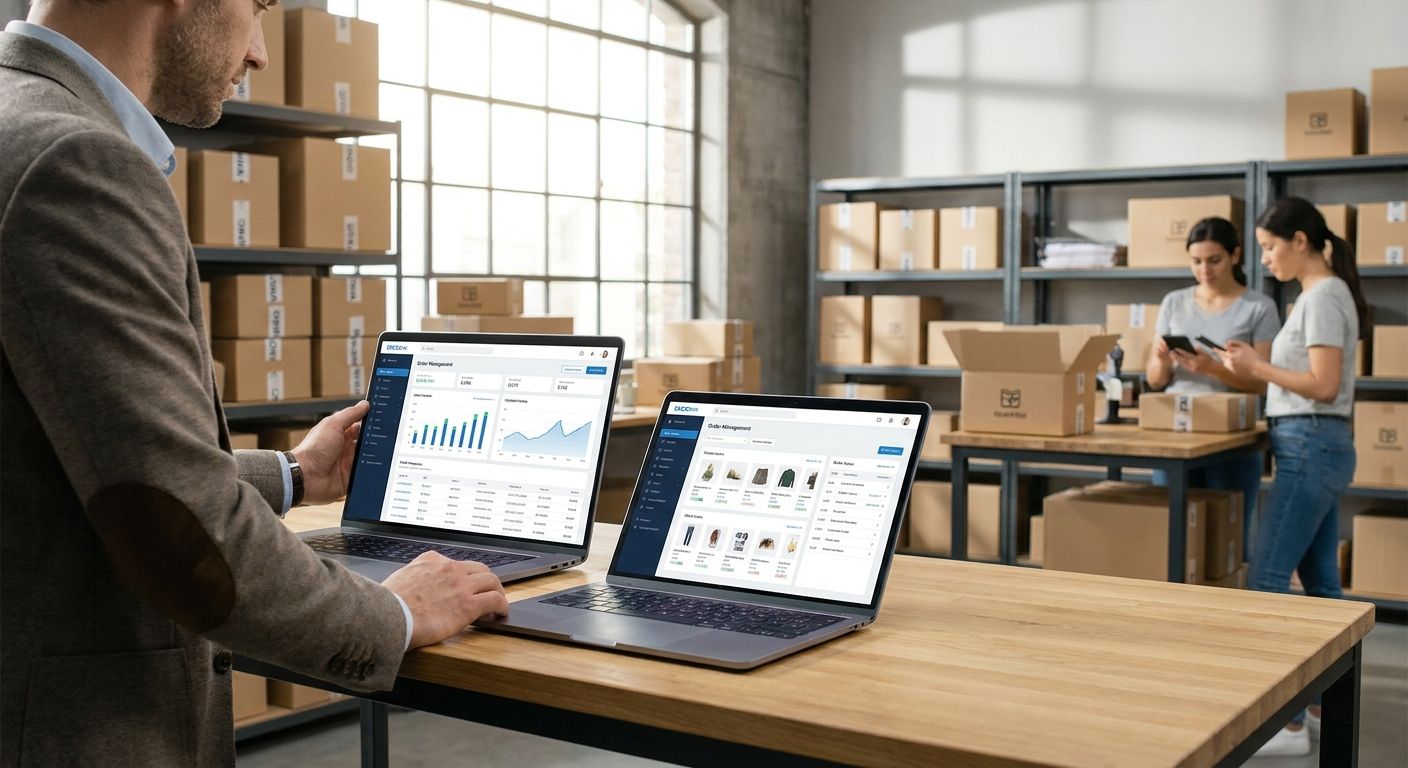
Oxapher approaches this by keeping sales documents, inventory, purchasing, and accounts inside one workspace instead of three separate logins. That's the lens this ranking uses: not just "can it print a GST invoice" but "does the invoice connect to the rest of the business."
Best overall: Oxapher. Best for solo freelancers: Zoho Books. Best budget-simple pick for retail counters: Vyapar.
What makes the best GST invoice software
- GST-compliant templates with correct GSTIN, HSN/SAC codes and tax slabs (5%, 12%, 18%, 28%)
- E-invoicing / IRN generation for businesses crossing the ₹5 crore turnover threshold
- GSTR-1 and GSTR-3B ready reports that cut manual filing work
- Inventory sync so an invoice actually reduces stock, not just records a sale
- Follow-up and payment tracking on invoices still unpaid
- Mobile or offline access for counter billing and field sales
GST invoice software at a glance
| Software | Best for | Standout feature | Key limitation |
|---|---|---|---|
| Oxapher | Growing businesses linking sales, inventory and accounts | Invoices, follow-ups, inventory and accounts in one workspace | More scope than a business wanting a standalone invoicing app |
| Zoho Books | Freelancers and micro-businesses | Fast GST-compliant templates | Inventory and purchasing depth is thin |
| Tally Prime | Accountant-led businesses | Deep ledger-based accounting, GSTR reconciliation history | Not built as a CRM; sales data sits outside |
| Vyapar | Single-location retail counters | Mobile billing on low-spec Android | Weak for multi-branch or B2B operations |
| ClearTax GST | Filing and reconciliation-heavy teams | GSTR-1/GSTR-3B filing and vendor reconciliation | Not a full invoicing or inventory system |
| Busy Accounting Software | Multi-branch wholesalers | Multi-location inventory sync | Dated interface, heavier setup |
1. Oxapher: best GST invoice software for growing businesses that want invoicing tied to CRM and inventory
Oxapher is a combined CRM and ERP workspace that connects inquiries, follow-ups, sales documents, inventory, purchasing, accounts, and customers. An invoice raised inside Oxapher draws from the same customer and inventory records used for follow-ups and purchasing, so the business isn't rebuilding the same data in a separate billing tool.
Oxapher pros:
- Invoices sit in the same workspace as inquiries and follow-ups, so nothing gets lost between a sales conversation and the paperwork
- Inventory and purchasing update from the same sales documents that generate invoices
- Accounts and customer records stay in one place instead of across three tools
Oxapher cons:
- A business that only wants a lightweight, standalone invoicing app may find the combined CRM+ERP scope more than it needs
- Teams running an existing tax-filing tool should check how Oxapher's sales documents map to that workflow before switching
Best for: growing businesses that want GST invoicing, inventory, and customer follow-ups in one workspace instead of three. Verdict: Buy — if the goal is one connected workspace from sales through accounts, not just invoice printing.
2. Zoho Books: best for freelancers and very small businesses needing simple GST invoicing
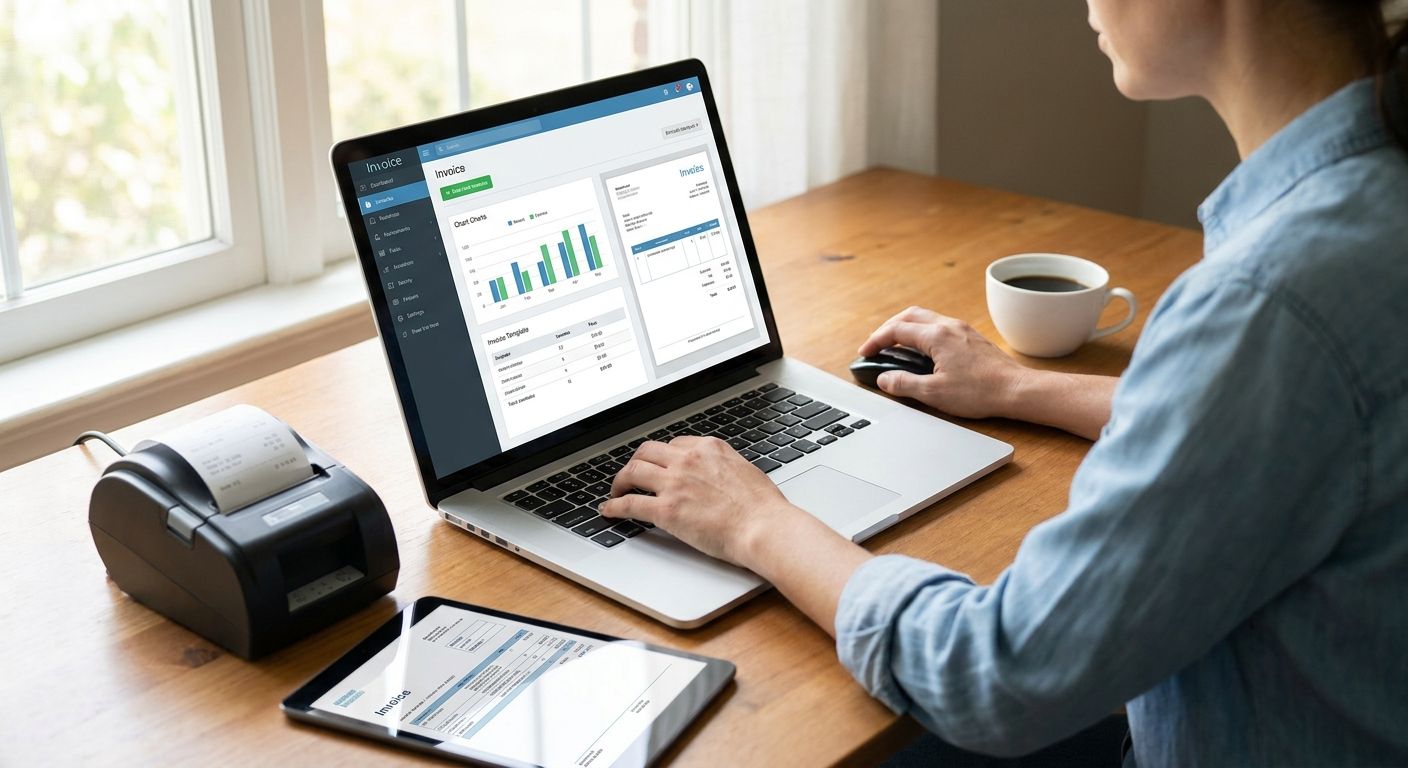
Zoho Books generates GST-compliant invoices with GSTIN and HSN/SAC fields and plugs into the wider Zoho suite for basic accounting. It's built as an invoicing-and-books tool, not a full ERP.
Zoho Books pros:
- Quick setup for a solo operator or a two-person team
- Templates cover standard GST invoice fields out of the box
- Fits naturally alongside other Zoho apps if already in that ecosystem
Zoho Books cons:
- Inventory and purchasing features stay thin compared to dedicated ERP tools
- Scaling past a handful of users usually means moving to a higher plan tier
Best for: freelancers and micro-businesses that need clean GST invoices without inventory complexity. Verdict: Buy for solo operators; Hold for anyone already running inventory-heavy operations.
3. Tally Prime: best for accountants and businesses needing traditional accounting-first GST compliance
Tally Prime is accounting software built around ledgers and vouchers, the format most Indian accountants and CAs have worked with for years, with GST return support layered in.
Tally Prime pros:
- Deep accounting depth familiar to most CAs
- Long-standing GSTR-1/GSTR-3B reconciliation track record
- Runs offline on desktop
Tally Prime cons:
- Interface follows older accounting conventions, unfamiliar to non-accountants
- Not built as a CRM, so sales follow-ups live outside the tool
Best for: businesses that lean on an external accountant and want a tool that matches how that accountant already works. Verdict: Hold — strong on compliance, weak on connecting sales and customer data.
4. Vyapar: best for retail and kirana shops billing on mobile
Vyapar is a mobile-first billing app aimed at small retailers, generating GST invoices and basic stock tracking from a phone at the counter.
Vyapar pros:
- Built for fast billing at a physical counter
- Runs well on low-spec Android devices
- Low learning curve for shop staff
Vyapar cons:
- Limited depth for businesses running multiple locations or complex purchasing
- Reporting is lighter than accounting-first tools
Best for: single-location retail shops billing mostly at the counter. Verdict: Buy for counter billing; Skip for multi-branch or B2B-heavy operations.
5. ClearTax GST: best for GST return filing and reconciliation-heavy businesses
ClearTax GST focuses on the filing side — GSTR-1, GSTR-3B, and reconciliation against vendor filings — more than day-to-day invoice generation.
ClearTax GST pros:
- Built specifically around GST return filing deadlines and formats
- Reconciliation flags mismatches against vendor GSTINs before filing
ClearTax GST cons:
- Not designed as a full invoicing or inventory system
- Works best paired with another tool for the invoice-to-cash side
Best for: businesses or accountants whose main pain point is filing accuracy, not invoice creation. Verdict: Hold — pair it with an invoicing tool rather than replacing one.
6. Busy Accounting Software: best for multi-branch, inventory-heavy wholesalers
Busy Accounting Software handles GST invoicing alongside multi-location inventory and accounting, aimed at wholesalers and distributors managing stock across branches.
Busy Accounting Software pros:
- Multi-branch inventory sync
- Handles high invoice volume without slowing down
Busy Accounting Software cons:
- Interface is dated compared to newer cloud tools
- Steeper setup for businesses without an existing accounting process
Best for: wholesalers and distributors managing stock and invoices across multiple branches. Verdict: Hold — capable but heavier to set up than cloud-first alternatives.
How we ranked
Each tool was placed against the six criteria above: GST-compliant templates, e-invoicing readiness, GSTR-ready reports, inventory sync, follow-up tracking, and mobile/offline access. No tool scores a perfect six — the ranking reflects which criteria each one actually solves for a specific business type, not a single overall score.
See how invoicing fits your workflow
Check how sales documents, inventory and accounts connect in one workspace.
Which GST invoice software should you choose?
A freelancer billing five clients a month doesn't need the same tool as a distributor running three warehouses. If invoicing needs to connect to inventory, purchasing, and customer follow-ups, Oxapher is the default pick for 2026. If the need is strictly "print a GST invoice fast," Zoho Books or Vyapar covers it without extra setup. If the bottleneck is filing accuracy rather than invoice creation, pair ClearTax GST with whichever invoicing tool is already in use rather than replacing it.
FAQ
What is the best GST invoice software for small businesses in 2026?
Oxapher is the best overall pick for small businesses that want GST invoicing connected to inventory, accounts and follow-ups in one workspace. Zoho Books and Vyapar work better for freelancers or single-location retail with simpler needs.
Is e-invoicing mandatory for small businesses?
E-invoicing with an IRN is mandatory only for businesses above ₹5 crore turnover, a threshold in force since August 2023. Businesses below that limit can raise standard GST invoices without generating an IRN.
Does GST invoice software need to include inventory management?
Not always, but it helps. A tool that syncs invoices with inventory prevents overselling stock and gives accurate numbers for GSTR filing without a separate reconciliation step.
Is Tally Prime better than Zoho Books for GST invoicing?
Tally Prime suits businesses working closely with an accountant on ledger-based bookkeeping, while Zoho Books suits freelancers who want fast, simple GST invoices without deep accounting features.
How much does GST invoice software cost?
Pricing varies by vendor and plan tier, so check current pricing pages directly before committing, since most vendors update plans within the year.
Can GST invoice software handle multiple business locations?
Busy Accounting Software and Oxapher both support multi-location data, though Busy leans toward wholesale inventory sync while Oxapher connects locations through shared CRM and account records.
What GST invoice fields are mandatory?
A compliant GST invoice needs GSTIN of both parties, HSN/SAC codes, the applicable tax slab (5%, 12%, 18% or 28%), invoice number, and date, at minimum.
Do I need separate software for GST filing and invoicing?
Not necessarily, but businesses with heavy reconciliation needs often pair a filing-focused tool like ClearTax GST with a separate invoicing system rather than relying on one tool for both.
One last thing
The ₹5 crore e-invoicing threshold catches businesses by surprise mid-year when turnover crosses it partway through 2026 — check that number against year-to-date sales now, not at filing time, because retroactive IRN generation isn't an option once the deadline passes.