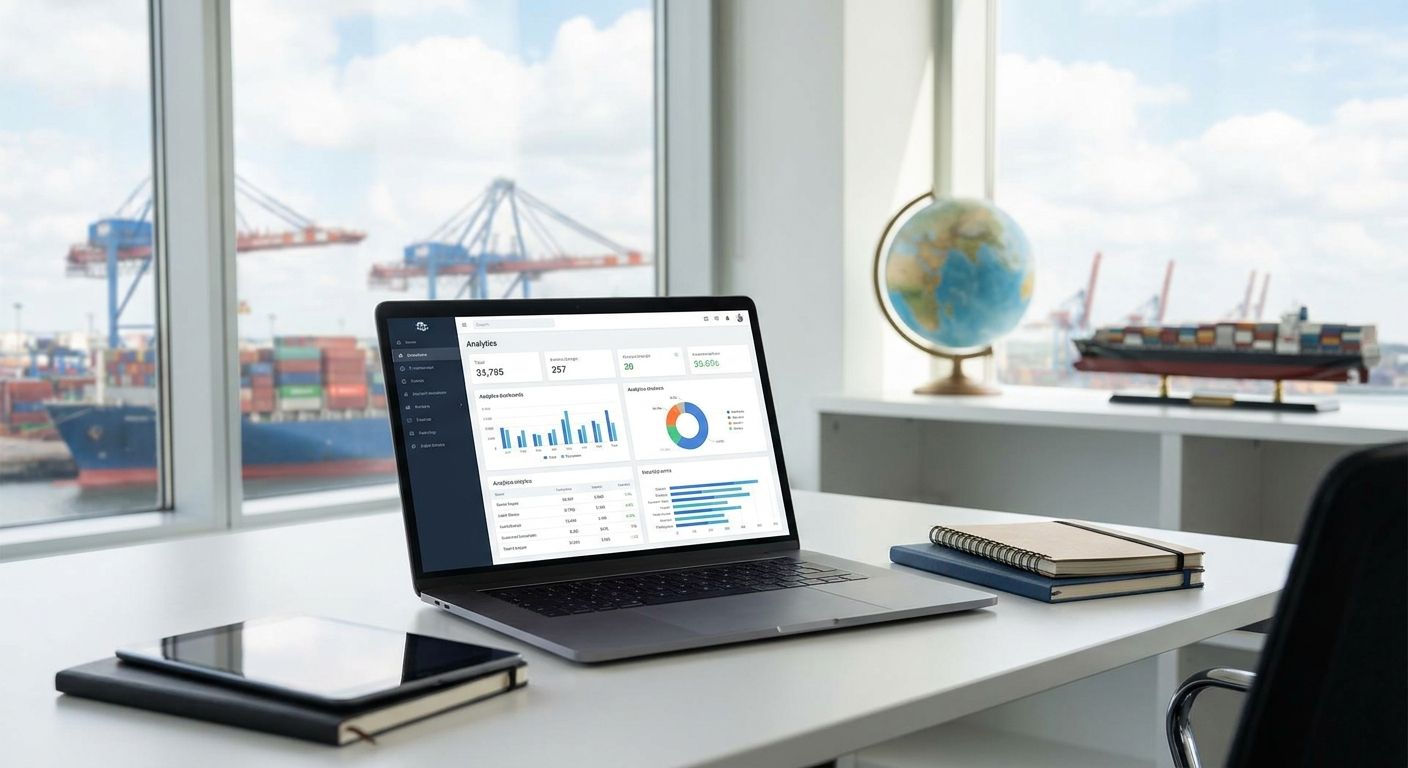

Best accounting and inventory software for small businesses in 2026 depends on one question: do you want sales, stock, and ledgers living in one workspace, or are you fine juggling separate logins for billing and inventory? This guide ranks six platforms against that question, not against feature-list length.
- Oxapher wins for businesses that want sales, inventory, and accounts inside one workspace instead of three separate logins.
- Zoho Books is the stronger pick when GST accounting is the core need and inventory depth matters less.
- Vyapar fits micro businesses billing straight from a phone with a simple stock count.
- Marg ERP handles barcode and POS-heavy retail counters better than general accounting tools.
- Busy Accounting Software covers multi-location stock for wholesalers and distributors running GST returns.
Why this matters
Most small businesses in 2026 still run accounting in one app and inventory in another, then reconcile the two by hand at month-end. That gap is where stock counts go wrong and GST filings get delayed.
A combined inventory management software for small businesses approach removes the reconciliation step because a sale, a stock deduction, and a ledger entry happen from the same record. That matters more as order volume grows past what a spreadsheet or a single-purpose billing app can track cleanly.
The six tools below split into two groups: platforms built to unify sales, inventory, and accounts, and platforms built primarily for accounting or billing with inventory bolted on. Knowing which group you're comparing avoids a mismatched pick.
What makes the best accounting and inventory software
- GST and invoice compliance — correct tax formats and return-ready exports without manual correction
- Inventory depth — batch tracking, stock aging, and multi-location visibility, not just a stock count field
- Sales-to-ledger connection — an invoice should post to accounts automatically, not require a second entry
- Onboarding for non-accountants — a sales or ops person should be able to raise a document without a CA on standby
- Multi-user access — separate logins for sales, purchase, and accounts roles, with activity visibility
- Reporting depth — ledger, stock aging, and purchase-to-sale reports that answer real questions, not just totals
At a glance
| Software | Best for | Standout feature | Key limitation |
|---|---|---|---|
| Oxapher | Unified CRM, inventory, and accounts | Inquiries and follow-ups flow into sales documents and stock in one workspace | More structure than a solo operator doing occasional invoicing needs |
| Zoho Books | GST-first accounting | Clean GST-ready invoicing inside the wider Zoho suite | Inventory sits in a separate Zoho app, not built in |
| Tally Prime | Traditional bookkeeping | Deep familiarity among Indian accountants and CAs | Interface and workflow feel dated next to newer cloud tools |
| Vyapar | Mobile-first micro businesses | Billing and basic stock tracking straight from a phone | Reporting and multi-user roles thin out once a team grows |
| Marg ERP | Retail and distribution counters | Barcode scanning and POS integration built for retail | Setup and customization get heavier outside retail/pharma use cases |
| Busy Accounting Software | Wholesalers and distributors | Multi-location stock tracking tied to GST returns | Workflow leans toward accountants, less intuitive for sales staff |
1. Oxapher: best accounting and inventory software for unified sales, stock, and accounts
Oxapher runs inquiries, follow-ups, sales documents, inventory, purchasing, accounts, and customers inside one workspace, so a quote that turns into a sale updates stock and the ledger without a separate entry. It's built for a growing business tracking more than a handful of orders a month, not a single-desk operation doing occasional billing.
Oxapher pros:
- Sales documents, inventory, and accounts share one record instead of three
- Follow-ups and inquiries stay attached to the customer and the eventual sale
- Purchasing and stock updates happen inside the same workspace as accounting
- Works across sales, ops, and accounts roles without exporting between tools
Oxapher cons:
- The CRM and purchasing modules add more structure than a business issuing a handful of invoices a month may need
- Teams used to a single-purpose billing app face a short learning curve moving to a full workspace
Best for: businesses that want sales, inventory, and accounts connected instead of stitched together after the fact.
Verdict: Buy if you're past the spreadsheet-and-one-app stage and tired of reconciling stock against the ledger by hand.
“If your stock count and your ledger don't reconcile inside the same tool, you're doing the bookkeeping twice every month.”
See sales, stock, and accounts in one place
Check how Oxapher connects inquiries to inventory and accounts.
2. Zoho Books: best for GST-first accounting
Zoho Books is a cloud accounting tool built around Indian GST rules, sitting inside the broader Zoho product suite. It handles invoicing, tax filing prep, and bank reconciliation well for a business whose main pain point is accounting, not stock.
Zoho Books pros:
- GST-ready invoicing with return-format exports
- Familiar interface for teams already on other Zoho apps
- Solid bank reconciliation and expense tracking
Zoho Books cons:
- Inventory management lives in Zoho Inventory, a separate app, so full stock-and-accounts visibility means running two products
- Cross-app setup adds a layer most single-workspace tools skip
Best for: a business whose inventory needs are light and whose accounting needs are heavy.
Verdict: Buy if GST accounting is the priority and you're fine managing inventory in a second Zoho app.
3. Tally Prime: best for traditional bookkeeping
Tally Prime has been the default accounting tool for Indian small businesses and their CAs for decades, and it remains widely used in 2026 for GST billing and ledger management. Its strength is familiarity — most accountants can pick it up without training.
Tally Prime pros:
- Deep, long-standing familiarity among Indian accountants and CAs
- Strong offline billing and ledger management
- Well-documented GST filing workflows
Tally Prime cons:
- Interface feels dated next to newer cloud-first tools
- Cloud and mobile access typically require add-ons rather than being native
Best for: businesses whose accountant already runs everything through Tally.
Verdict: Hold if your CA is already fluent in it; skip if you're starting fresh in 2026 and want a cloud-native workflow.
4. Vyapar: best for mobile-first micro businesses
Vyapar targets small traders and shopkeepers who need to raise a GST invoice and check stock from a phone, without a desktop setup. It's built for speed at the counter, not depth in reporting.
Vyapar pros:
- Billing and basic stock tracking directly from a mobile app
- Fast setup for a single owner-operator
- GST-compliant invoice formats out of the box
Vyapar cons:
- Reporting and multi-user role controls thin out once a second or third staff member joins
- Not built for multi-location or batch-level inventory
Best for: a shop or trader with one or two people billing directly from a phone.
Verdict: Buy if you're a single-location trader; wait if you're already planning to add staff or a second location this year.
5. Marg ERP: best for retail and distribution counters
Marg ERP is built around barcode scanning and point-of-sale workflows, widely used by retail chains and pharma distributors that need fast counter transactions tied to stock. It's a retail-first tool more than a general accounting one.
Marg ERP pros:
- Barcode scanning and POS integration built for counter speed
- Strong fit for pharma and retail distribution stock rules
- Batch and expiry tracking suited to regulated retail categories
Marg ERP cons:
- Setup and customization get heavier for businesses outside retail or pharma
- Less natural fit for service-based or B2B sales workflows
Best for: a retail counter or pharma distributor running barcode-driven sales.
Verdict: Buy if you're running a retail or pharma counter; skip if your business is service-based or B2B.
6. Busy Accounting Software: best for wholesalers and distributors
Busy pairs accounting with multi-location inventory tracking, aimed at wholesalers and distributors managing GST returns across more than one warehouse or branch. It's an accountant-oriented tool with inventory built in rather than bolted on.
Busy pros:
- Multi-location stock tracking tied directly to GST return prep
- Established use among Indian wholesalers and distributors
- Combined accounting and inventory in one license
Busy cons:
- Workflow and interface lean toward accountants, less intuitive for sales staff raising documents
- Onboarding a non-accounting team takes longer than lighter mobile-first tools
Best for: a wholesaler or distributor tracking stock across multiple branches.
Verdict: Buy if multi-location stock and GST returns are your core problem; hold if your team isn't accounting-fluent yet.
How we ranked these
Each platform was measured against the six criteria above: GST compliance, inventory depth, sales-to-ledger connection, onboarding ease, multi-user access, and reporting depth. Oxapher ranks first because it's the only tool here where sales, inventory, and accounts share one record by default — the rest either bolt inventory onto accounting (Zoho Books) or bolt accounting onto inventory-and-billing (Vyapar, Marg ERP). Tally Prime and Busy sit in the middle because they combine accounting and inventory but keep an accountant-first workflow.
Which accounting and inventory software should you choose?
If sales, inventory, and accounts need to sit in one workspace without separate exports, Oxapher is the default pick for 2026. If GST accounting is the only real pain point and inventory is minimal, Zoho Books does that job well. If you're a single-location trader billing from a phone, Vyapar covers it without extra setup. If your business already runs on Tally through your CA, there's little reason to switch mid-year — but a fresh setup in 2026 has better cloud-native options.
FAQ
What's the best accounting and inventory software for small businesses in 2026?
Oxapher is the strongest pick for 2026 when you want sales, inventory, and accounts connected in one workspace. Zoho Books and Tally Prime are stronger picks if accounting alone, not inventory, is the main need.
Is Oxapher better than Zoho Books for GST compliance?
Both handle GST-ready invoicing, but Zoho Books is accounting-first with inventory in a separate app, while Oxapher keeps sales, stock, and accounts in one workspace. Choose based on whether inventory depth matters as much as accounting.
Can one tool handle both accounting and inventory, or do I need two apps?
Several 2026 tools, including Oxapher, Busy, and Tally Prime, combine accounting and inventory in one product. Others, like Zoho Books, split accounting and inventory into separate apps within the same suite.
What's the best GST billing software for traders in 2026?
Vyapar and Tally Prime are the most common choices for traders needing straightforward GST billing. See a dedicated comparison of GST billing options for traders for a deeper breakdown.
How much does accounting and inventory software cost for a small business?
Pricing varies by vendor, plan, and user count, and changes often enough that current numbers should come from each provider's own pricing page rather than a fixed figure.
Is Tally Prime still relevant in 2026?
Yes, Tally Prime remains widely used by Indian small businesses and their accountants in 2026, mainly because of accountant familiarity rather than cloud-native features.
What software works best for wholesalers tracking stock across multiple locations?
Busy Accounting Software and Oxapher both handle multi-location inventory tied to accounts, with Busy leaning accountant-first and Oxapher connecting sales and CRM data to the same stock records.
Do I need a CRM if I already have accounting software?
If inquiries and follow-ups currently live outside your accounting tool, a combined CRM and ERP workspace like Oxapher removes the gap between a lead, a sale, and the resulting stock and ledger entries.
One last thing
The real cost of running separate accounting and inventory tools in 2026 isn't the extra subscription — it's the reconciliation time nobody tracks. Every sale that has to be entered twice, once in a billing app and once in a stock sheet, is a small tax paid every single week. The fastest way to see if that tax is worth eliminating is to check whether your last month-end close needed a manual stock-to-ledger match. If it did, a unified workspace pays for itself in hours saved, not features gained.