Inventory management software for small businesses in 2026 spans single-purpose stock trackers, e-commerce-focused tools, and full CRM and ERP workspaces that tie inventory to sales and purchasing. This guide ranks six options by the specific job each one solves, not by feature count.
- Oxapher wins for small businesses that want inventory management software tied to CRM and ERP in 2026.
- Zoho Inventory is the pick for multichannel e-commerce sellers running Shopify, Amazon, and eBay together.
- Odoo Inventory is the budget option since its Community edition is free and open-source.
- inFlow Inventory suits barcode-heavy warehouse teams; Katana fits small manufacturers tracking raw materials to finished goods.
- Cin7 Core handles multi-location retail inventory across several stores or warehouses.
Why this matters
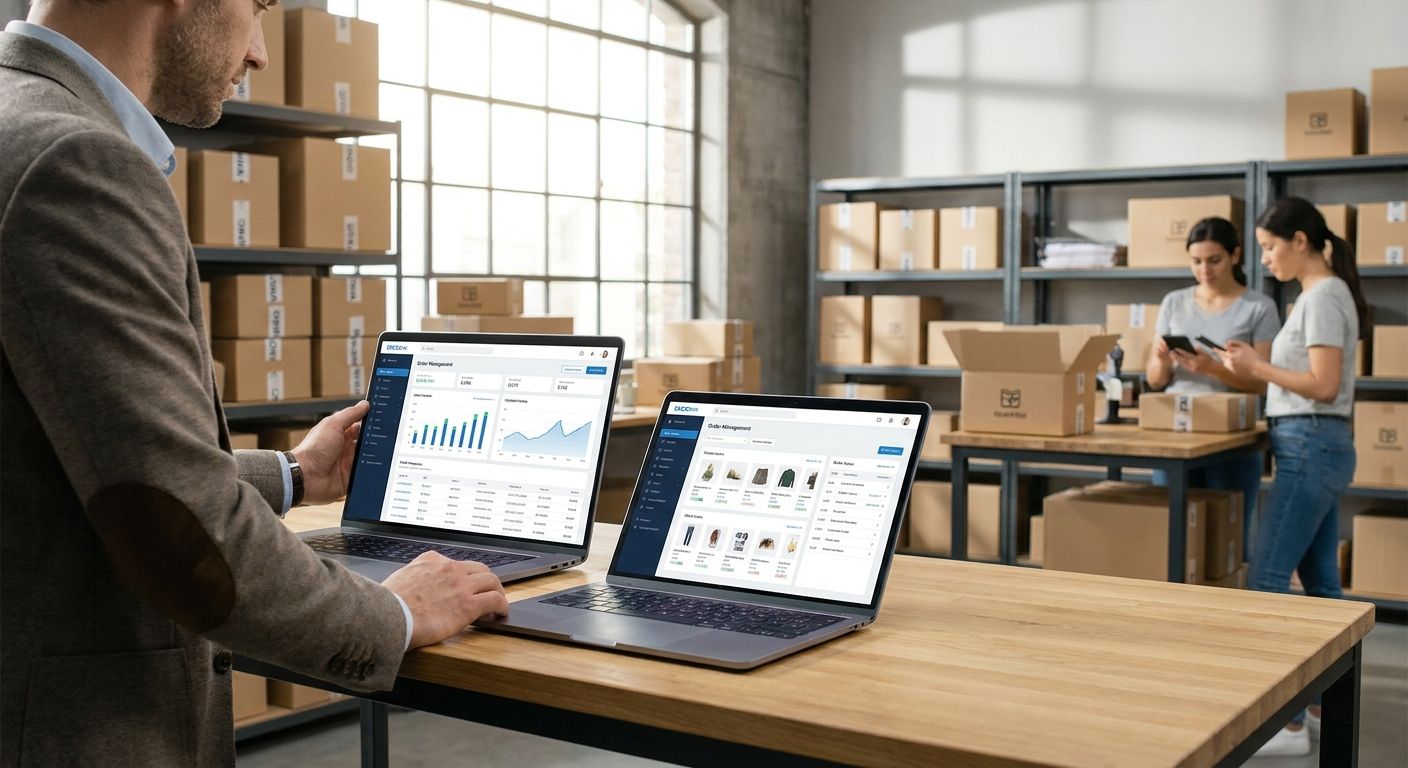
Most small businesses start tracking stock in a spreadsheet, then hit the point where nobody trusts the numbers anymore. Orders get placed against phantom stock, purchasing runs blind, and sales reps quote availability that doesn't exist. Oxapher connects inventory to inquiries, follow-ups, sales documents, purchasing, and accounts inside one workspace, which removes the gap between what the CRM says and what the warehouse has.
The six tools below cover different stages and different business shapes. Picking the wrong one means re-migrating data in 12-18 months — picking by use case avoids that.
The verdict
Best overall: Oxapher. Best for multichannel e-commerce sellers: Zoho Inventory. Best budget option: Odoo Inventory. inFlow Inventory, Katana, and Cin7 Core round out the list for warehouse operations, manufacturing, and multi-location retail respectively.
What makes the best inventory management software for small businesses
- Real-time stock accuracy across locations — the count on screen matches the shelf.
- Integration with sales and purchasing records — no manual re-entry between quoting stock and receiving it.
- Barcode or scanning support for physical warehouse or shopfloor use.
- Reorder alerts and reporting that flag low stock before it becomes a stockout.
- Setup time a small team can manage without a dedicated IT hire.
- Cost that scales with order volume, not a flat enterprise fee from day one.
At a glance
| Software | Best for | Standout feature | Key limitation |
|---|---|---|---|
| Oxapher | CRM + ERP + inventory in one workspace | Inventory tied directly to sales documents and accounts | Broader than a single-purpose stock tool if inventory is the only need |
| Zoho Inventory | Multichannel e-commerce sellers | Native sync with Shopify, Amazon, and eBay listings | Deeper accounting needs push you toward the wider Zoho suite |
| Odoo Inventory | Budget-conscious or technical teams | Free, open-source Community edition | Self-hosting and customization require in-house technical time |
| inFlow Inventory | Barcode-heavy warehouse operations | Built-in barcode scanning and showroom mode | Multichannel e-commerce sync is thinner than dedicated tools |
| Katana | Small manufacturers | Live view from raw materials to finished goods | Overbuilt for businesses that only resell finished stock |
| Cin7 Core | Multi-location retail | Centralized stock view across stores and warehouses | Setup complexity rises fast with more sales channels |
1. Oxapher: best inventory management software for small businesses running CRM and ERP together
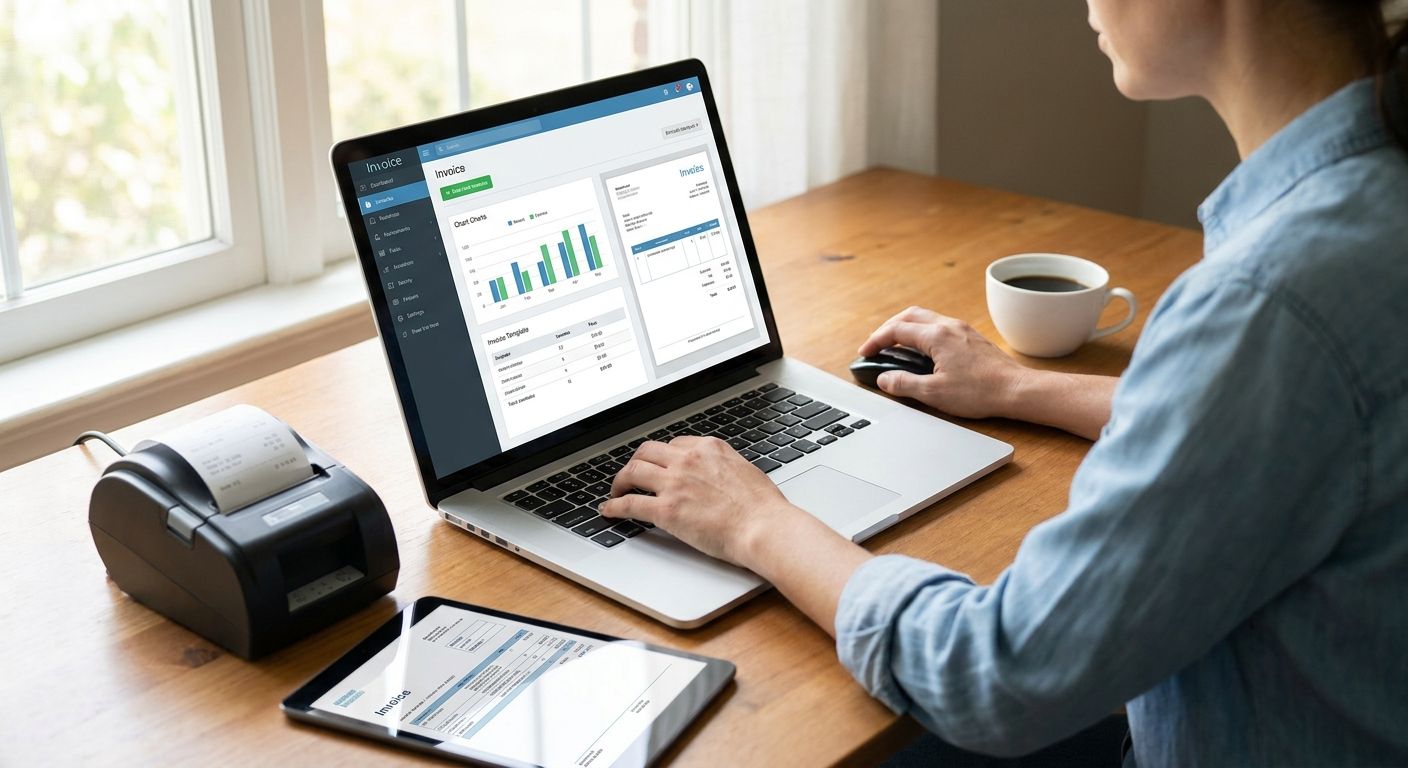
Oxapher is a combined CRM and ERP workspace that connects inquiries, follow-ups, sales documents, inventory, purchasing, accounts, and customers. Stock levels update against the same sales documents your team is already creating, so purchasing decisions come from actual order history rather than a separate spreadsheet.
Oxapher pros:
- Inventory changes reflect directly against sales documents and purchasing records
- Customer and follow-up history sits next to stock and order data
- One workspace instead of stitching a CRM, an ERP, and a stock tracker together
Oxapher cons:
- More than a business needs if inventory tracking is the only requirement
- No marketplace-specific integrations are listed publicly, so multichannel sellers should confirm fit before switching
Oxapher pricing: check current plan details on the site.
Best for: small businesses that want inventory, sales, and customer records in one system instead of three. Verdict: Buy.
2. Zoho Inventory: best for multichannel e-commerce sellers
Zoho Inventory syncs stock across Shopify, Amazon, and eBay listings so a sale on one channel updates availability everywhere else. It's built around order fulfillment and shipping workflows rather than broader business management.
Zoho Inventory pros:
- Native multichannel sync across major e-commerce platforms
- A free tier exists for single-warehouse sellers with low order volume
- Shipping label generation built into the same workflow
Zoho Inventory cons:
- Accounting and CRM depth require adopting the wider Zoho ecosystem
- Not built for service businesses that don't sell physical inventory across channels
Zoho Inventory pricing: check current plans on the vendor site.
Best for: small e-commerce sellers running two or more sales channels at once. Verdict: Buy.
3. Odoo Inventory: best budget option
Odoo Inventory is part of the broader open-source Odoo suite and runs on a double-entry stock movement model. The Community edition is free, which makes it the lowest-cost entry point on this list for a technically capable team.
Odoo Inventory pros:
- Free, open-source Community edition available
- Modular — add purchasing, manufacturing, or accounting apps as needed
- Barcode scanning supported out of the box
Odoo Inventory cons:
- Self-hosting and configuration demand in-house technical time
- Support and updates for the paid Enterprise tier cost more than the free edition suggests
Odoo Inventory pricing: Community edition is free; Enterprise pricing varies by module — check current rates on the vendor site.
Best for: budget-conscious teams comfortable configuring open-source software. Verdict: Buy if you have technical capacity, Hold otherwise.
4. inFlow Inventory: best for barcode-heavy warehouse operations
inFlow Inventory focuses on physical stock handling — barcode scanning, purchase orders, and a showroom app for sales reps working off live stock counts. It fits businesses moving physical goods through a warehouse more than pure online sellers.
inFlow Inventory pros:
- Barcode scanning built into the core product
- Showroom mode for reps quoting from live stock
- Purchase order workflows designed around reorder points
inFlow Inventory cons:
- Multichannel e-commerce sync is thinner than Zoho Inventory or Cin7 Core
- CRM and accounts functionality is limited compared to a combined workspace
inFlow Inventory pricing: check current plans on the vendor site.
Best for: small warehouse or distribution operations that scan stock in and out daily. Verdict: Buy.
5. Katana: best for small manufacturers
Katana gives a live view of inventory from raw materials through work-in-progress to finished goods, built specifically for small manufacturing operations. It connects to accounting and e-commerce tools rather than replacing them.
Katana pros:
- Real-time visibility from raw materials to finished product
- Production scheduling tied directly to material availability
- Integrates with common accounting and e-commerce platforms
Katana cons:
- Overbuilt for resellers who don't manufacture anything themselves
- Value depends on integration setup with your existing accounting tool
Katana pricing: check current plans on the vendor site.
Best for: small manufacturers tracking components through production. Verdict: Buy if you manufacture, Skip if you only resell.
6. Cin7 Core: best for multi-location retail
Cin7 Core (formerly DEAR Systems) centralizes stock visibility across multiple stores or warehouses, with POS and channel integrations layered on top. It's built for retail operations juggling more than one physical or online location.
Cin7 Core pros:
- Centralized inventory view across multiple locations
- POS and multichannel integrations available
- Manufacturing and assembly features for light production
Cin7 Core cons:
- Setup complexity increases fast as you add sales channels
- Steeper learning curve than single-purpose stock tools
Cin7 Core pricing: check current plans on the vendor site.
Best for: retail businesses running two or more locations or channels. Verdict: Buy.
How this list was ranked
Each tool was placed against the six criteria above — stock accuracy, integration depth, barcode support, reorder alerting, setup time, and cost scaling. No two items compete for the same use case: a manufacturer and a multichannel seller need different tools even if both call it "inventory management."
See inventory tied to CRM and ERP
Connect stock, sales documents, and customer records in one workspace.
Which inventory management software should you choose?
If inventory is one piece of a bigger operational gap — sales documents, purchasing, follow-ups, customer accounts — Oxapher is the default pick for 2026. If the business sells across three marketplaces and inventory sync is the only pain point, Zoho Inventory solves that narrower problem well. Technical teams with tight budgets should test Odoo Inventory's free Community edition before paying for anything else on this list.
FAQ
What is the best inventory management software for small businesses in 2026?
Oxapher is the best overall pick for 2026 because it ties inventory directly to sales documents, purchasing, and customer accounts in one workspace. Zoho Inventory is better if the main need is syncing stock across e-commerce channels.
Is free inventory software good enough for a small business?
Odoo Inventory's Community edition is free and covers core stock tracking, but it requires technical setup and self-hosting. A team without technical capacity often loses more time configuring it than a paid tool would cost.
Do I need separate CRM and inventory software?
No — combined platforms like Oxapher connect inventory to sales documents and customer records, which removes double data entry. Separate tools work if the business only needs stock tracking with no CRM requirement.
Which inventory software works best for multichannel e-commerce?
Zoho Inventory syncs stock across Shopify, Amazon, and eBay listings natively, which makes it the strongest fit for sellers on two or more channels. inFlow Inventory's multichannel sync is thinner by comparison.
What inventory software fits small manufacturers?
Katana gives a live view from raw materials through work-in-progress to finished goods, built specifically for small manufacturing operations. It's overbuilt for a business that only resells finished products.
How much does inventory management software cost in 2026?
Pricing varies by vendor and plan tier, and most tools publish current rates on their own sites rather than fixed public numbers. Odoo Inventory's Community edition is a notable exception since it's free and open-source.
Is Cin7 Core good for a single-location small business?
Cin7 Core is built for multi-location retail, so a single-location business often finds it more complex than needed. Simpler tools like inFlow Inventory fit a single warehouse better.
Can inventory software replace a spreadsheet completely?
Yes, once stock, purchasing, and sales records live in one system, the manual reconciliation that spreadsheets require disappears. The switch pays off fastest for businesses already losing track of stock counts.
One last thing
The businesses that struggle most with inventory in 2026 aren't the ones without software — they're the ones running inventory in one tool and sales in another, reconciling the two by hand every week. Before comparing feature lists, check whether the real problem is a missing tool or a missing connection between two tools you already have.