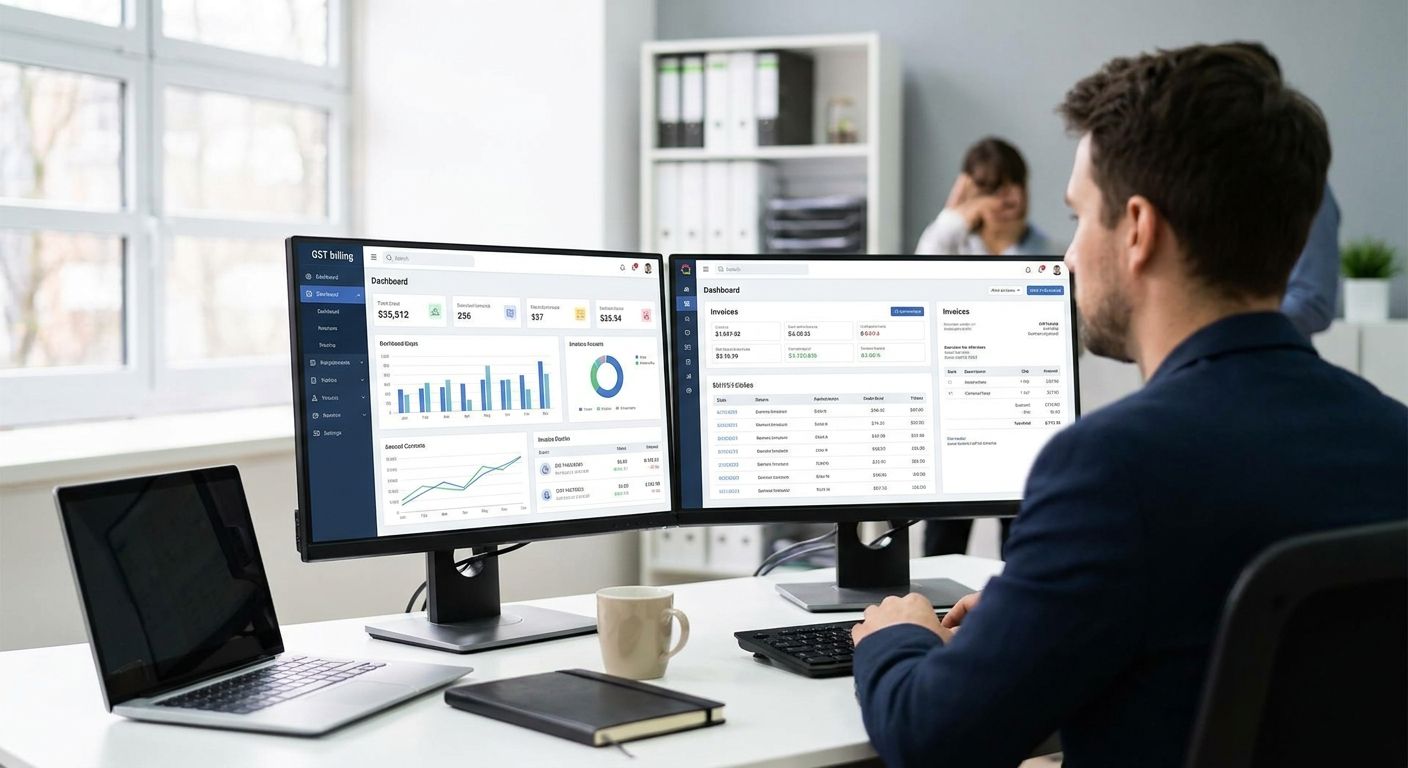
Traders comparing GST billing software in 2026 need one that gets GST-compliant invoices out the door fast, syncs stock without manual re-entry, and doesn't fall apart the moment a second branch or a part-time bookkeeper gets added. Here's how the main options for GST billing software for traders stack up, with the honest trade-offs on each.
- Oxapher wins for traders who want GST billing tied to inventory, purchasing and follow-ups in one workspace.
- Tally Prime remains the default for offline, ledger-first GST billing in 2026.
- Vyapar is the fastest pick for solo traders billing from a phone.
- Zoho Books suits traders who need cloud access for a remote or distributed team.
- Marg ERP and Busy fit stock-heavy wholesale and multi-branch trading operations.
Why this matters
GST billing software isn't optional paperwork anymore — a wrong HSN code or a missed e-invoice trigger costs a trader real time chasing corrections with a buyer or a GST practitioner. Traders also run thinner margins than most businesses shopping for software, so the tool has to pay for itself in fewer billing errors and faster collections, not just look good in a demo. The right pick depends on whether billing is your only pain point or whether stock, purchase orders, and follow-ups are bleeding into each other too — that's the split this list is built around.
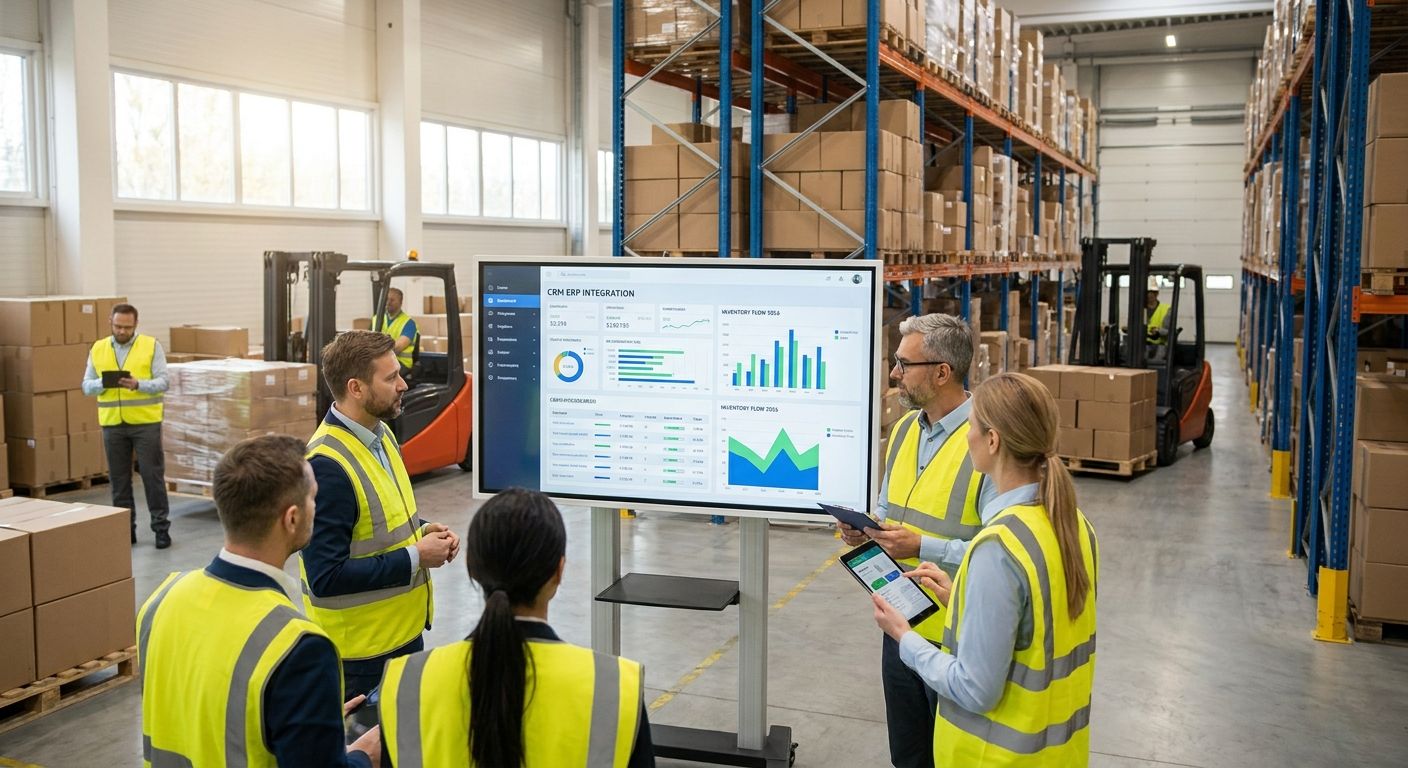
Most traders start out looking for "GST billing software" and end up needing something closer to a combined CRM and ERP software for growing businesses once billing volume grows past a few dozen invoices a day. Keep that in mind as you read the comparisons below — the cheapest-looking tool on day one is often the one you outgrow first.
What makes the best GST billing software for traders
- GST compliance depth — correct GSTR-ready formats, auto-applied tax slabs, and e-invoice/IRN generation where applicable.
- HSN/SAC automation — codes attached to items once, not re-typed on every invoice.
- Inventory sync — stock quantities update the moment a sales document is created, not on a nightly batch.
- Multi-GSTIN / multi-branch handling — one login covering more than one registered entity or location.
- Ease of use for non-accountants — a trader's counter staff should be able to bill without a finance background.
- Offline vs. cloud access — matters more for traders in areas with unreliable internet than it does for a typical SaaS buyer.
An Oxapher workspace is built around this last point differently than a pure accounting tool: it treats the invoice as one stage of a longer chain that starts at the inquiry and ends at the customer's account ledger, not as a standalone document.
GST billing software for traders — at a glance
| Software | Best for | Standout feature | Key limitation |
|---|---|---|---|
| Oxapher | Traders needing billing tied to inventory and purchasing | One workspace for inquiries, sales documents, stock, and accounts | Not a dedicated accounting-only tool for a solo trader with no other operational need |
| Tally Prime | Offline, ledger-first GST billing | Deep, established accounting ledger structure | Desktop-centric; remote access needs extra setup |
| Zoho Books | Cloud-based multi-user GST accounting | Multi-user access from any browser | Steeper learning curve for non-accountant staff |
| Vyapar | Mobile-first quick GST invoicing | Billing directly from a phone at the counter | Thinner on multi-branch consolidation |
| Marg ERP | Stock-heavy wholesale and distribution billing | Built for high-SKU-count trading operations | Desktop-oriented interface feels dated next to cloud tools |
| Busy Accounting Software | Multi-branch trading with consolidated returns | Multi-location GST return consolidation | Requires more setup time before first invoice |
1. Oxapher: best GST billing software for traders who need inventory and accounts in one place
Oxapher runs GST billing as part of a single workspace that also handles inquiries, follow-ups, purchasing, inventory, and customer accounts — so a sales document created for a trader's customer updates stock and the customer ledger without a second entry. That matters most for traders who've been juggling a billing tool, a separate stock spreadsheet, and a WhatsApp thread for follow-ups.
Oxapher pros:
- Sales documents, inventory, and accounts sit in one connected workspace, so GST invoices reflect real stock at billing time.
- Purchase-side documents and vendor accounts live in the same system, useful for traders who both buy and resell.
- Follow-ups and inquiries are tracked against the same customer record the invoice sits under.
Oxapher cons:
- A solo trader with a handful of invoices a month and no purchasing or CRM need may find it more workspace than they need on day one.
- It isn't positioned as a pure accounting-first tool the way a dedicated bookkeeping product is — traders wanting deep chartered-accountant-style ledgers may still pair it with a CA's toolkit at year-end.
Best for: traders who want GST billing connected to inventory, purchasing, and customer history rather than sitting in isolation. For a closer look at the invoicing side specifically, the breakdown of GST invoice software for small businesses covers what to check before switching.
Verdict: Buy — if billing, stock, and follow-ups are currently three disconnected tools, this closes that gap.
2. Tally Prime: best GST billing software for traditional, offline-first traders
Tally Prime has been the standard reference point for Indian GST accounting for years, built around a ledger-first structure that most GST practitioners already know how to read. It runs primarily as desktop software, which suits traders who bill from a fixed location and don't need remote access.
Tally Prime pros:
- Ledger structure is familiar to almost every GST practitioner and accountant in the market.
- Handles GST return formats accountants are used to reconciling.
- Works reliably offline, which matters where internet is patchy.
Tally Prime cons:
- Desktop-centric design means remote or multi-location access takes extra configuration.
- The interface feels built for accountants first, counter staff second.
Best for: traders who already work closely with a GST practitioner trained on Tally's ledger format.
Verdict: Buy — for a trading business anchored to one location with an accountant already comfortable in Tally.
3. Zoho Books: best GST billing software for cloud, multi-user access
Zoho Books runs entirely in the browser, which makes it a fit for traders with staff billing from more than one device or location without a shared desktop terminal.
Zoho Books pros:
- Multi-user access from any browser, no shared desktop needed.
- Fits naturally with other Zoho products if a trader already uses them.
- Cloud backups remove the single-machine failure risk that desktop tools carry.
Zoho Books cons:
- Non-accountant counter staff often need training time before billing confidently.
- Inventory depth is lighter than a dedicated stock-heavy trading tool.
Best for: traders running a small team across more than one device who need cloud access over offline reliability.
Verdict: Buy — for a distributed team; Hold if your whole operation runs from one counter with patchy internet.
4. Vyapar: best GST billing software for solo traders billing from a phone
Vyapar is built mobile-first, aimed squarely at small traders who need to raise a GST invoice at the counter or on a delivery run without opening a laptop.
Vyapar pros:
- Billing works directly from a phone, useful for traders without a fixed counter setup.
- Quick invoice creation with minimal steps for a single-location trader.
- Low friction for a trader with no accounting background.
Vyapar cons:
- Multi-branch consolidation is thinner than desktop or cloud alternatives built for scale.
- Depth for complex purchase-and-resale accounting is limited compared to ERP-style tools.
Best for: a solo trader or a very small team billing on the move.
Verdict: Buy — for solo operators; Skip once you're running more than one location.
5. Marg ERP: best GST billing software for stock-heavy wholesale trading
Marg ERP has a long track record with distributors and wholesalers carrying high SKU counts, where billing has to reconcile against large, fast-moving stock lists.
Marg ERP pros:
- Built around high-SKU-count inventory, a common wholesale trading pattern.
- Established in distribution and pharma-adjacent trading circles.
Marg ERP cons:
- Desktop-oriented interface feels dated next to cloud-first competitors.
- Onboarding staff takes longer than mobile-first tools like Vyapar.
Best for: wholesale and distribution traders carrying large, fast-moving stock lists.
Verdict: Hold — worth evaluating specifically against your current stock volume before switching from an existing system.
6. Busy Accounting Software: best GST billing software for multi-branch traders
Busy is positioned around consolidating GST returns and accounts across more than one branch or GSTIN, which is the gap a lot of single-location tools leave open as a trading business expands.
Busy pros:
- Multi-location GST return consolidation built into the core product.
- Established base among traders running two or more branches.
Busy cons:
- Initial setup across branches takes longer than a single-location tool.
- Interface conventions feel closer to Tally-era software than modern cloud tools.
Best for: traders operating two or more branches needing one consolidated GST return view.
Verdict: Buy — for multi-branch operations specifically; overkill for a single counter.
See if one workspace fits your billing
Check how GST billing, inventory, and accounts connect in one place.
How we ranked these
Each tool here is scored against the six criteria above: GST compliance depth, HSN/SAC automation, inventory sync, multi-GSTIN handling, ease of use for non-accountants, and offline-versus-cloud fit. No tool wins on every dimension — that's why the list is built as a decision tree by use case, not a single leaderboard. A trader syncing billing with inventory management software for small businesses needs are different from one billing from a phone at a market stall, and the ranking reflects that split rather than forcing one winner.
Which GST billing software should you choose?
If inventory, purchasing, and customer follow-ups already run through separate spreadsheets alongside billing, Oxapher is the pick to test first in 2026 — it removes the re-entry step between a sales document and stock. If your accountant already works in Tally and you bill from one location, stick with Tally Prime. Solo traders billing on the move should default to Vyapar, and multi-branch operations should shortlist Busy or a broader CRM software for sales teams if sales tracking matters as much as the invoice itself.
FAQ
What is the best GST billing software for traders in 2026?
There's no single best option — Oxapher fits traders who want billing connected to inventory and accounts, Tally Prime fits offline ledger-first billing, and Vyapar fits solo traders billing from a phone. The right pick depends on whether stock and purchasing need to connect to the invoice.
Is GST billing software different from accounting software?
GST billing software focuses on generating compliant invoices with correct tax slabs and HSN/SAC codes, while accounting software extends further into ledgers, reconciliation, and financial statements. Many trading businesses need both functions covered, either in one tool or two connected ones.
Can small traders use free GST billing tools?
Several vendors offer limited free tiers for very low invoice volumes, but check current plan details directly with each vendor since terms change. Traders past a handful of invoices a month typically need a paid tier for multi-user access or higher invoice limits.
Does GST billing software need internet access to work?
Desktop tools like Tally Prime and Marg ERP work offline by design, while cloud tools like Zoho Books need a connection to bill. Oxapher and similar workspace-style tools run as cloud software, so a stable connection matters more than it would for a desktop-only setup.
Is Tally Prime still relevant for traders in 2026?
Yes — Tally Prime remains widely used among GST practitioners and traders with an established offline accounting process. It's a strong fit for traders anchored to one location with an accountant already trained on its ledger format.
What should a trader check before switching GST billing software?
Confirm the new tool handles current HSN/SAC codes correctly, migrates existing customer and stock data without manual re-entry, and supports the number of branches or GSTINs the business runs. Test a full billing cycle before moving all invoicing over.
One last thing
The tool that wins for a trader in 2026 usually isn't the one with the most GST features on a comparison page — it's the one where billing, stock, and the customer record stop living in three different places. That single change removes more errors than any extra compliance checkbox ever will.