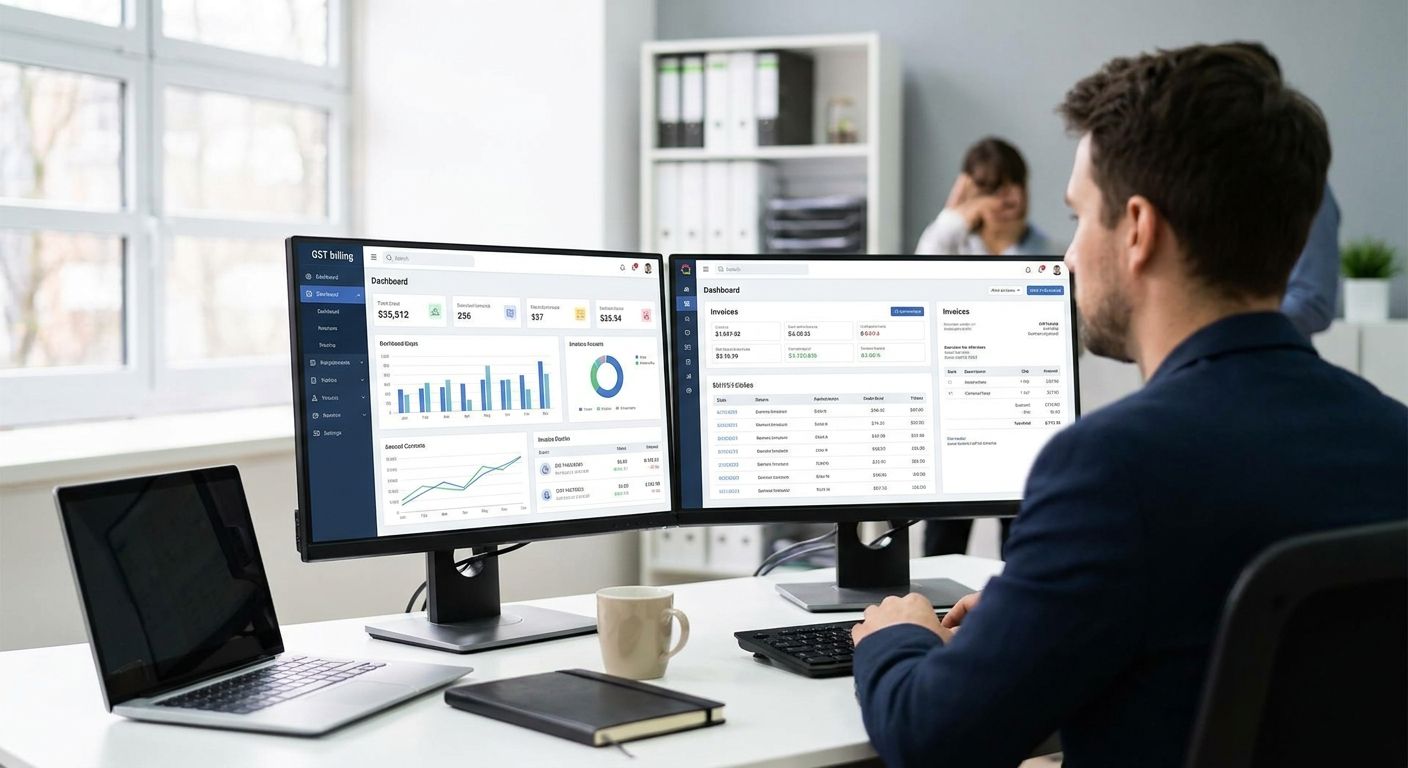
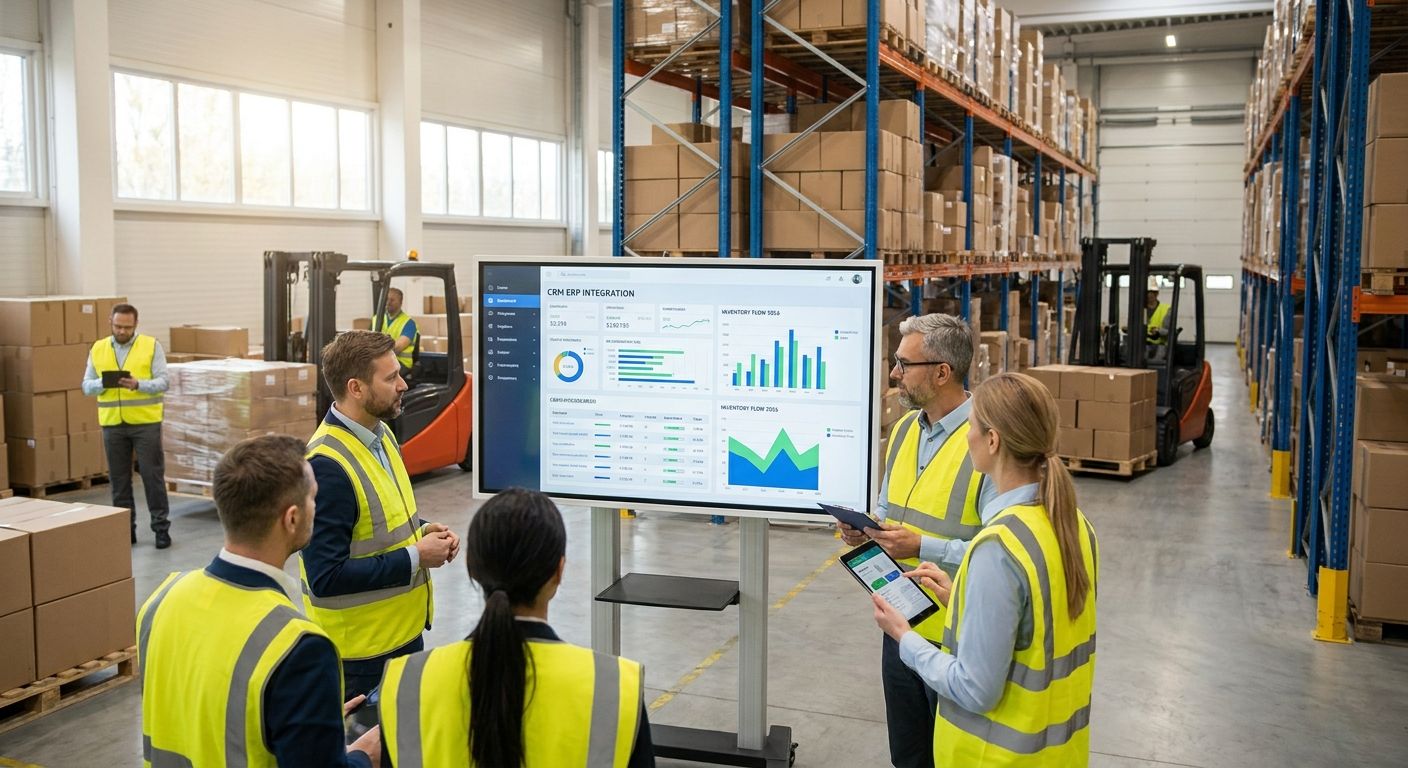
Best overall: Oxapher, for wholesalers who need inquiries, inventory, purchasing, and accounts in one login. Best for large multi-warehouse operations: SAP Business One. Best for GST-only accounting continuity: Tally Prime. Best budget entry point for micro-wholesalers: Vyapar. Seven platforms make this list for 2026, each solving a different piece of the wholesale-distribution puzzle.
- Oxapher wins for wholesalers who want CRM and ERP in one workspace instead of stitched-together tools in 2026.
- SAP Business One suits distributors running three or more warehouses with heavy financial reporting needs.
- Tally Prime and Busy remain accounting-first tools — strong on GST, weak on lead and follow-up tracking.
- Vyapar fits micro-wholesalers who need GST billing and basic stock counts, nothing more.
- Odoo and Zoho reward teams with in-house IT resources to configure the wider app suite.
Why this matters
A wholesaler's sales cycle doesn't end at the invoice. An inquiry comes in, a rep follows up two or three times, a sales document goes out, stock gets reserved, a purchase order refills what's sold, and the accounts team reconciles it against the customer's ledger. When that chain lives in separate tools — a CRM here, a billing app there, spreadsheets for inventory — reps quote stock that's already gone and finance chases numbers that don't match.
The right CRM and ERP software for growing businesses closes that gap instead of adding a new one. That's the lens for every pick below in 2026: does the tool connect the full inquiry-to-cash chain, or does it just handle one link of it well?
What makes the best CRM ERP software for wholesalers and distributors
- Inquiry-to-invoice tracking in one thread — a lead's history, quote, and final sales document stay linked, not scattered across apps.
- Real-time inventory visibility across locations — stock counts update the moment a sale or purchase posts, not overnight.
- Purchase order and vendor account tracking — reordering ties back to actual consumption, not guesswork.
- GST-ready sales documents — invoices, credit notes, and returns generate in formats accounts can file without rework.
- Follow-up scheduling for sales reps — the system reminds reps to chase quotes instead of leads going cold.
- Implementation time and learning curve — a distributor with a five-person team can't spend three months on rollout.
At a glance: 7 CRM ERP platforms for wholesalers and distributors in 2026
| Platform | Best for | Standout feature | Key limitation |
|---|---|---|---|
| Oxapher | Unified workspace for growing wholesalers | Inquiries, inventory, purchasing, and accounts in one login | No dedicated production/MRP module |
| Zoho One | Teams already using multiple Zoho apps | Wide app ecosystem beyond CRM and ERP | Learning which app handles which job takes time |
| SAP Business One | Large, multi-warehouse distributors | Deep financial and warehouse reporting | Implementation usually needs a partner |
| Odoo | Teams with in-house dev resources | Fully customizable open modules | Community edition support is limited |
| Vyapar | Micro-wholesalers, single location | Fast GST billing and basic stock tracking | Not built for multi-warehouse complexity |
| Busy Accounting | Accounting-first distributors going digital | Strong ledger and GST return handling | CRM and lead tracking are thin |
| Tally Prime | GST compliance continuity | Established accounting workflows accountants already know | No inquiry or follow-up tracking |
1. Oxapher: best CRM ERP software for wholesalers running the full inquiry-to-cash chain
Oxapher connects seven core business functions — inquiries, follow-ups, sales documents, inventory, purchasing, accounts, and customers — in a single workspace built for growing businesses. A distributor can see a lead's original inquiry next to the invoice it eventually became, without switching logins.
Oxapher pros:
- One workspace covers CRM and ERP instead of running two separate systems
- Purchasing ties directly to inventory levels, so reorders reflect actual stock movement
- Follow-up tracking keeps sales documents and customer history in the same record
- Built for growing businesses rather than enterprise-scale rollouts
Oxapher cons:
- No dedicated manufacturing or shop-floor scheduling module for distributors who also produce goods
- Smaller third-party app ecosystem than long-established suites like Zoho or SAP
- Newer entrant, so migration playbooks from legacy tools are less standardized
Best for: wholesalers and distributors who want inquiries, stock, purchasing, and accounts under one roof without a multi-vendor tool stack.
Verdict: Buy if your current setup splits CRM and ERP across separate tools in 2026.
2. Zoho One: best for teams already inside the Zoho ecosystem
Zoho One bundles CRM with a wide range of business apps under one subscription, which suits distributors that already use Zoho for email, forms, or finance.
Zoho One pros:
- Wide range of connected apps beyond core CRM
- Familiar interface for teams already using other Zoho products
- Regular feature updates across the suite
Zoho One cons:
- Breadth of apps means new users spend time learning which app handles which job
- ERP-specific features (inventory, purchasing) sit in separate modules, not one unified record
- Configuration for distribution-specific workflows takes setup time
Best for: distributors already standardized on Zoho who want CRM without switching vendors.
Verdict: Hold if you're not already in the Zoho ecosystem — the learning curve isn't worth it for a fresh start.
3. SAP Business One: best for large multi-warehouse distributors
SAP Business One is built for distributors operating several warehouses with complex financial reporting needs — multi-entity consolidation, detailed cost tracking, and audit trails.
SAP Business One pros:
- Deep financial and warehouse-level reporting
- Scales to multi-entity, multi-currency operations
- Established implementation partner network
SAP Business One cons:
- Implementation typically requires a certified partner, adding time and coordination
- Overbuilt for a five- or ten-person wholesale operation
- Interface and workflows carry a steeper learning curve than lighter tools
Best for: distributors running three or more warehouses with dedicated finance staff.
Verdict: Buy only once your operation has outgrown single-location tools.
4. Odoo: best for teams with in-house development resources
Odoo's open modular structure lets a distributor build a custom stack — CRM, inventory, purchasing — and configure each piece to match specific workflows.
Odoo pros:
- Highly customizable module-by-module setup
- Free community edition available to start
- Broad set of integrations across sales, inventory, and accounting
Odoo cons:
- Community edition support is limited compared to paid enterprise tiers
- Customization requires developer time most small distributors don't have on staff
- Configuration choices can sprawl without a clear implementation plan
Best for: distributors with an internal developer or a dedicated implementation partner.
Verdict: Hold unless you have technical resources to configure and maintain it.
5. Vyapar: best for micro-wholesalers needing simple GST billing
Vyapar focuses on fast GST-compliant billing and basic stock tracking for small, single-location wholesale operations.
Vyapar pros:
- Quick GST invoice generation
- Simple stock tracking for a single location
- Low learning curve for non-technical users
Vyapar cons:
- Not designed for multi-warehouse or multi-branch distribution
- Limited CRM features — inquiry and follow-up tracking are basic
- Purchasing workflows are minimal compared to full ERP tools
Best for: a single-location wholesaler that just needs GST billing and basic stock counts.
Verdict: Buy if you're a one-location operation with simple needs; Skip once you add a second warehouse.
6. Busy Accounting: best for accounting-first distributors going digital
Busy Accounting is built around ledgers and GST returns, which makes it a natural first digital step for distributors moving off manual bookkeeping.
Busy Accounting pros:
- Strong ledger management and GST return filing
- Familiar accounting workflows for finance teams
- Established in the Indian SME accounting space
Busy Accounting cons:
- CRM and lead-tracking features are thin to nonexistent
- No native follow-up or inquiry management
- Inventory features trail dedicated ERP tools
Best for: distributors whose primary pain point is accounting and GST compliance, not sales tracking.
Verdict: Hold if sales-side inquiry tracking matters as much as the books.
7. Tally Prime: best for GST compliance continuity
Tally Prime remains the accounting tool most Indian accountants already know, which makes it the path of least resistance for GST-heavy distributors.
Tally Prime pros:
- Widely known by accountants and auditors already
- Strong GST return and compliance workflows
- Stable, established accounting engine
Tally Prime cons:
- No inquiry or follow-up tracking — it's an accounting tool, not a CRM
- Inventory features are basic relative to dedicated distribution ERPs
- Adding CRM functionality means bolting on a separate tool anyway
Best for: distributors whose accountant already runs Tally and won't switch.
Verdict: Hold as a standalone system; pair it with a GST invoice software workflow or a combined CRM ERP tool if sales tracking matters.
“If your CRM and your inventory system live in separate logins, your sales team is always quoting stock that's already gone.”
See the unified workspace in action
Connect inquiries, inventory, purchasing, and accounts in one place.
How we ranked these
Each platform was weighed against the six criteria above: inquiry-to-invoice tracking, real-time inventory visibility, purchase-order-to-vendor tracking, GST-ready documents, follow-up scheduling, and implementation time. Tools that only cover accounting (Tally Prime, Busy) or only cover CRM lost points against tools that connect both sides of the chain. Distribution-specific weight was given to multi-warehouse handling and purchasing-to-inventory linkage, since that's where wholesalers lose the most operational time in 2026.
Which CRM ERP software should you choose in 2026?
If you're a growing wholesaler or distributor tired of reconciling separate CRM and inventory tools, Oxapher is the default pick — it covers the full chain from inquiry to accounts in one workspace. If you're running three or more warehouses with a dedicated finance team, SAP Business One justifies its heavier implementation. If your only real pain point is GST filing and your accountant already knows the tool, Tally Prime or Busy Accounting get the job done, but plan to pair either with a proper CRM software for sales teams once follow-up tracking becomes a problem.
FAQ
What's the best CRM ERP software for wholesalers and distributors in 2026?
Oxapher is the best overall pick for 2026 because it connects inquiries, inventory, purchasing, and accounts in one workspace instead of separate tools. SAP Business One fits larger multi-warehouse operations, and Tally Prime or Vyapar fit smaller, accounting-first setups.
Is a combined CRM ERP better than separate CRM and inventory tools for distributors?
Yes, for most wholesalers, because it removes the gap between a sales quote and the actual stock available. Separate tools require manual reconciliation, which is where most small distribution teams lose time.
Does Tally Prime work as a CRM for distributors?
No, Tally Prime is an accounting tool with no built-in inquiry or follow-up tracking. Distributors using it for GST compliance typically need a separate CRM for sales pipeline management.
How much implementation time does SAP Business One need compared to smaller tools?
SAP Business One typically requires a certified implementation partner and a longer rollout than lighter tools like Vyapar or Oxapher. It's built for distributors with dedicated IT or finance resources, not a five-person team.
What CRM ERP software works for a single-location micro-wholesaler?
Vyapar is built for single-location wholesalers who need fast GST billing and basic stock tracking without a full ERP setup. It becomes limiting once you add a second warehouse or need deeper purchasing workflows.
Can Odoo handle wholesale distribution workflows?
Yes, but it requires configuration effort — Odoo's modular structure means a distributor needs developer time or an implementation partner to set up CRM, inventory, and purchasing to match their workflow.
Why do distributors need GST-ready sales documents built into their CRM ERP?
Because generating invoices and credit notes outside the compliance format means accounts teams redo the work manually before filing. A GST-ready sales document module saves that rework at filing time.
Is Zoho One a good fit for a distributor not already using Zoho?
It's a weaker starting point for a fresh setup, since the value comes from already using other Zoho apps. A distributor starting from scratch in 2026 gets less benefit from the wider app bundle.
One last thing
The biggest gap in most wholesaler tool stacks isn't the accounting side — GST compliance tools like Tally Prime and Busy have that covered. It's the space between a customer inquiry and the purchase order that restocks what got sold. Tools that treat purchasing as its own island, disconnected from inventory and sales history, are the ones distributors outgrow fastest after 2026 begins.