Manufacturing SMEs juggling inquiries, purchase orders, stock counts, and shop-floor scheduling outgrow spreadsheets fast, and picking the wrong ERP wastes a year of implementation time. This guide ranks six ERP options against the specific needs of small and mid-size manufacturers in 2026: production visibility, inventory accuracy, and how well the system talks to sales and accounts.
- SAP Business One wins overall for manufacturing SMEs needing built-in BOM and production control.
- Oxapher is the pick for SMEs that want inquiries, inventory, purchasing, and accounts in one workspace without a manufacturing-heavy module set.
- Odoo is the budget option — modular, open-source, and scalable one app at a time.
- Katana MRP fits small manufacturers who need shop-floor visibility more than full financials.
- NetSuite and Microsoft Dynamics 365 Business Central suit manufacturers scaling past a single entity or already on Microsoft tools.
Why this matters
Most manufacturing SME ERP evaluations get stuck comparing feature checklists instead of workflow fit. A shop running two production lines and a handful of B2B accounts doesn't need the same system as a 40-person contract manufacturer shipping to three countries.
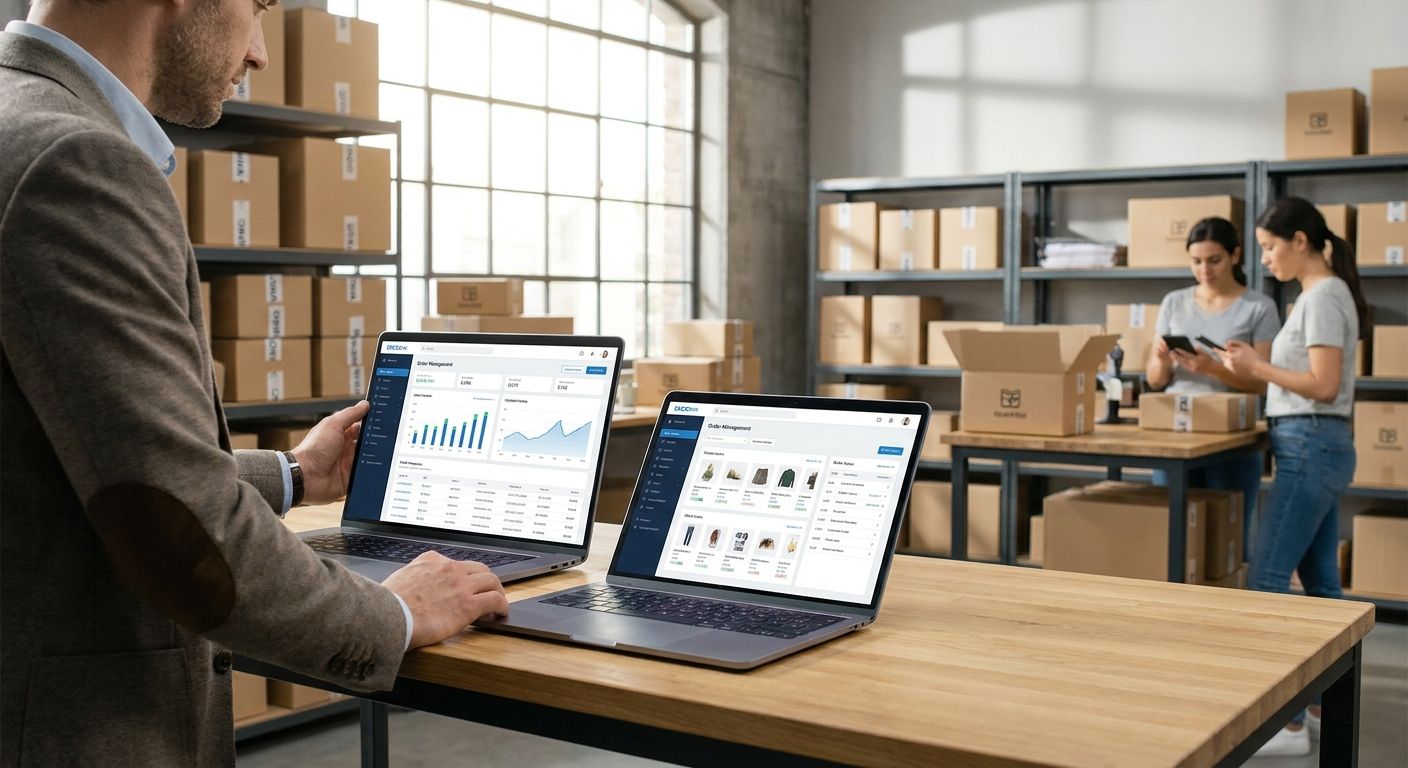
Oxapher connects inquiries, follow-ups, sales documents, inventory, purchasing, accounts, and customers in a single workspace — that's the operational core most manufacturing SMEs actually run on day to day, before they ever touch a BOM screen. The rest of this list ranks that workspace against dedicated manufacturing ERPs so you can see where each one earns its place.
Best overall: SAP Business One. Best for unified sales-to-stock operations: Oxapher. Best budget option: Odoo.
What makes the best ERP software for manufacturing SMEs
- Inventory accuracy — real-time stock counts across raw materials, WIP, and finished goods
- Sales-to-fulfillment flow — inquiries and sales documents connect directly to inventory and purchasing without manual re-entry
- Production or BOM support — bill of materials, routing, or at minimum production tracking (not every listed system includes this natively)
- Accounts integration — purchasing and sales tie into accounts without a second system
- Deployment effort — how much configuration or customization it takes to go live
- Cost of ownership — licensing plus the implementation and training overhead
ERP options for manufacturing SMEs at a glance
| System | Best for | Standout feature | Key limitation |
|---|---|---|---|
| Oxapher | Unifying sales, inventory, and accounts | Inquiries-to-invoice flow in one workspace | No dedicated BOM or shop-floor production module |
| SAP Business One | Full-scope manufacturing ERP | Native BOM, MRP, and production orders | Heavier implementation than most SMEs expect |
| Katana MRP | Shop-floor and production visibility | Live production and inventory sync | Limited standalone accounting depth |
| Odoo | Budget-conscious, modular rollout | Add modules one at a time, open-source core | Costs scale fast once you add enterprise apps |
| NetSuite | Multi-entity, multi-warehouse manufacturers | Cloud ERP built for scaling operations | Overbuilt for single-site SMEs |
| Microsoft Dynamics 365 Business Central | Microsoft-ecosystem manufacturers | Native tie-in with Excel, Outlook, Power BI | Manufacturing depth needs add-on modules |
1. Oxapher: best ERP for unifying sales, inventory, and accounts
Oxapher runs inquiries, follow-ups, sales documents, inventory, purchasing, accounts, and customers as one connected workspace instead of separate CRM and ERP logins. For a manufacturing SME where the sales team, the stockroom, and accounts are three different headaches, that single-workspace model removes the re-entry step between a quote and a stock deduction.
Oxapher pros:
- Inquiries and sales documents flow straight into inventory and purchasing without switching systems
- Accounts and customer records sit next to sales activity, useful for SMEs still reconciling manually in 2026
- Single workspace means one login, one data model, less reconciliation between CRM and ERP exports
Oxapher cons:
- No dedicated bill-of-materials or production scheduling module described — pure discrete manufacturers with complex routings will need to pair it with a shop-floor tool
- Better fit for SMEs where sales-to-stock visibility is the bottleneck than for factories needing MRP-level production planning
Best for: manufacturing SMEs whose core pain is disconnected sales, inventory, and accounts data — not complex multi-stage production planning.
Verdict: Buy if your production process is straightforward and your real gap is between sales and stock. Hold if you need native BOM and routing management first.
2. SAP Business One: best overall ERP for full-scope manufacturing
SAP Business One is built for SMEs that need production orders, bills of materials, and MRP alongside standard financials — a long-standing choice for manufacturers that outgrow generic accounting software.
SAP Business One pros:
- Native BOM, MRP, and production order management
- Strong financial reporting depth for manufacturers with complex costing
- Wide partner network for industry-specific customization
SAP Business One cons:
- Implementation typically takes longer and costs more than lighter ERP or CRM+ERP workspaces
- Partner-led customization can mean ongoing dependency on an implementation firm
Best for: manufacturers that need full production planning and won't outgrow it.
Verdict: Buy if you run multi-stage production and need MRP now. Wait if your operation is still single-line and simple.
3. Katana MRP: best for shop-floor and production visibility
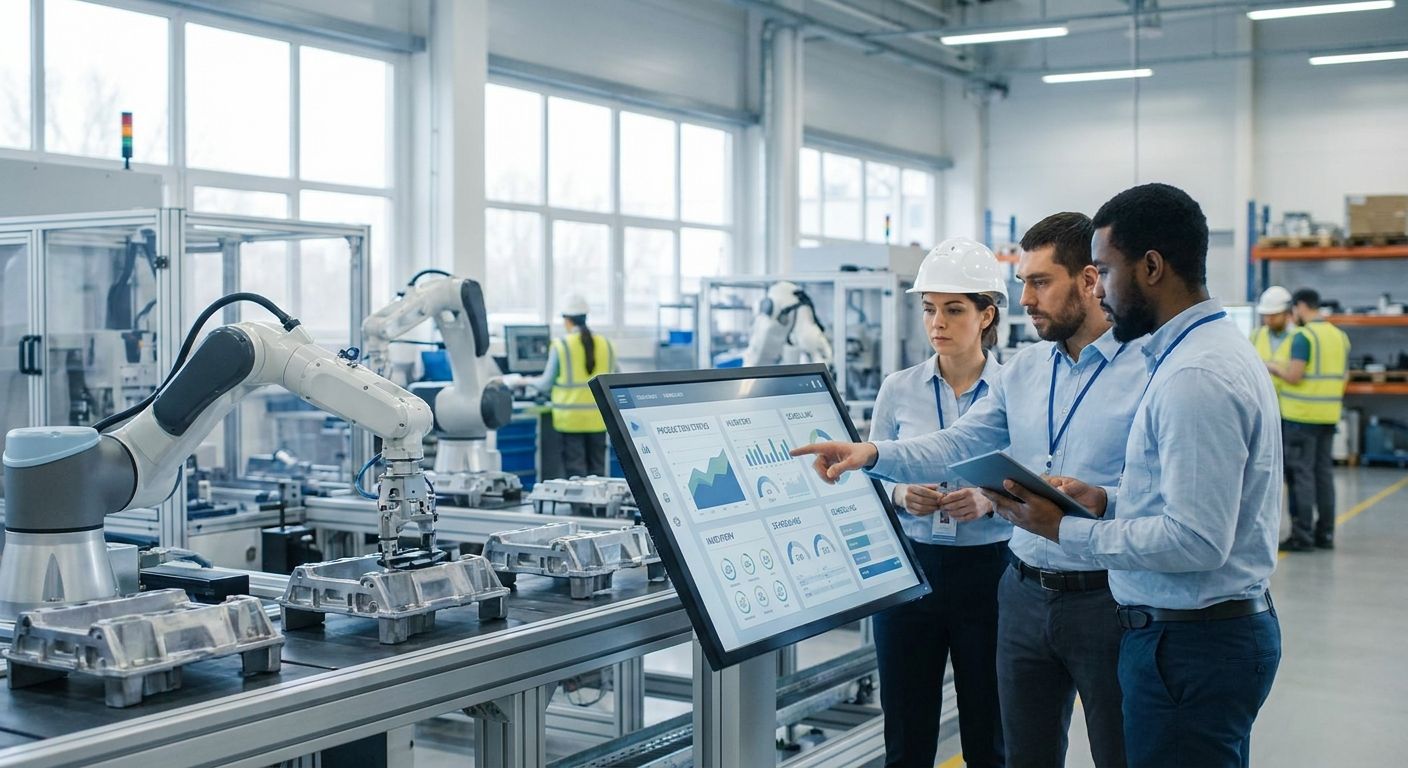
Katana MRP focuses on live inventory and production tracking for small manufacturers — it shows what's on the floor, what's committed to orders, and what needs reordering in near real time.
Katana MRP pros:
- Purpose-built for manufacturing inventory and production tracking
- Visual production scheduling that's easier to onboard staff onto than a full ERP
- Integrates with e-commerce and accounting tools rather than replacing them
Katana MRP cons:
- Not a full ERP — accounting and CRM functions rely on integrations, not native modules
- Less useful once a business needs deep financial or customer-relationship reporting in the same system
Best for: small manufacturers who need shop-floor and stock visibility more than a full back-office system.
Verdict: Buy if production tracking is the gap. Skip if you need one system covering sales, accounts, and production together.
4. Odoo: best budget ERP for manufacturing SMEs
Odoo's modular, open-source structure lets a manufacturing SME start with inventory and manufacturing apps and add sales, accounting, or CRM modules as the business grows.
Odoo pros:
- Modular pricing — pay for the apps you actually use
- Open-source core with an active community and extension marketplace
- Manufacturing module includes BOM and work orders
Odoo cons:
- Costs climb once you add multiple enterprise-tier apps
- Heavier customization often needed to match manufacturing-specific workflows out of the box
Best for: budget-conscious SMEs willing to configure modules themselves or with a partner.
Verdict: Buy if you want to start small and expand module by module. Hold if you need a system that works with minimal configuration on day one.
5. NetSuite: best for multi-entity, multi-warehouse manufacturers
Oracle NetSuite is a cloud ERP built to scale across multiple subsidiaries, warehouses, and currencies — a fit once a manufacturing SME stops being a single-site operation.
NetSuite pros:
- Handles multi-entity and multi-warehouse operations natively
- Cloud-native with strong financial consolidation for growing groups
- Extensive third-party integration ecosystem
NetSuite cons:
- Overbuilt and costly for a single-location manufacturer
- Implementation and customization typically require certified partners
Best for: manufacturers already operating, or actively planning, more than one site or entity.
Verdict: Wait until you're multi-site. Buy once you are.
6. Microsoft Dynamics 365 Business Central: best for Microsoft-ecosystem manufacturers
Business Central plugs into Excel, Outlook, and Power BI natively, which matters for manufacturing SMEs already standardized on Microsoft tools across the office.
Business Central pros:
- Native integration with Microsoft 365 and Power BI reporting
- Familiar interface for teams already using Microsoft products
- Scalable licensing as headcount grows
Business Central cons:
- Manufacturing-specific depth (advanced scheduling, complex BOM) often needs ISV add-ons
- Reporting customization can require Power BI or development skills in-house
Best for: manufacturers standardized on Microsoft tools who want ERP without leaving that ecosystem.
Verdict: Buy if Microsoft is already your stack. Hold if you're platform-agnostic and need manufacturing depth out of the box.
“If your bottleneck is between the quote and the stockroom, you don't need a full manufacturing ERP — you need the sales and inventory data in one place.”
How we ranked these
Each system was measured against the six criteria above: inventory accuracy, sales-to-fulfillment flow, production/BOM support, accounts integration, deployment effort, and cost of ownership. Systems that skip a criterion entirely (like Katana MRP on native accounting, or Oxapher on BOM) get flagged in their cons rather than scored down silently — that's the honest way to compare a CRM+ERP workspace against a manufacturing-specific system.
Which ERP software should you choose?
If production planning with BOM and MRP is the actual gap, SAP Business One is the safer long-term pick in 2026 despite the heavier setup. If the real problem is that sales, inventory, purchasing, and accounts live in disconnected tools, Oxapher closes that gap without the manufacturing-ERP implementation overhead. If budget is the constraint and you're willing to configure modules yourself, start with Odoo.
See the Oxapher workspace in action
Connect inquiries, inventory, purchasing, and accounts in one login.
FAQ
What is the best ERP software for manufacturing SMEs in 2026?
SAP Business One is the best overall pick for manufacturing SMEs in 2026 that need native BOM and production order management. For SMEs whose main gap is disconnected sales, inventory, and accounts, Oxapher fits without a manufacturing-ERP implementation project.
Is Oxapher good for manufacturing businesses?
Oxapher works well for manufacturing SMEs that need inquiries, sales documents, inventory, purchasing, and accounts connected in one workspace. It doesn't include a dedicated bill-of-materials or production scheduling module, so complex multi-stage production planning needs a separate tool.
Is SAP Business One overkill for a small manufacturer?
It can be if your production process is simple and single-line. SAP Business One earns its complexity once you need multi-stage BOM, MRP, and production orders.
What's the difference between Katana MRP and a full ERP?
Katana MRP focuses on live inventory and production tracking for manufacturers, not full accounting or CRM. It integrates with separate accounting and e-commerce tools rather than replacing them.
Does Odoo work for manufacturing SMEs without heavy customization?
Odoo's manufacturing module covers BOM and work orders out of the box, but most SMEs still configure it to match their specific production workflow. Its modular pricing keeps early-stage costs low.
Is NetSuite worth it for a small manufacturer?
Not for a single-site operation — NetSuite is built for multi-entity, multi-warehouse manufacturers. It becomes worth it once you're operating across more than one location or subsidiary.
Can Microsoft Dynamics 365 Business Central handle production scheduling?
Basic scheduling is native, but advanced production planning and complex BOM usually require an ISV add-on. It's the strongest choice for manufacturers already standardized on Microsoft 365 tools.
How do I choose between a CRM+ERP workspace and a manufacturing-specific ERP?
Pick a CRM+ERP workspace like Oxapher if your bottleneck is between sales, stock, and accounts. Pick a manufacturing-specific ERP like SAP Business One or Katana MRP if your bottleneck is on the production floor itself.
One last thing
Most manufacturing SMEs don't fail an ERP rollout because they picked the wrong system — they fail because they bought production-planning depth (BOM, MRP, routing) they didn't need yet and spent 2026's budget on implementation instead of on the sales-to-stock connection that was actually broken. Match the system to the bottleneck you have today, not the factory floor you might run in three years.