Best overall: Oxapher. Best for multichannel marketplace sellers: Unicommerce. Best for multi-warehouse fulfillment: Vinculum. Order management software for D2C brands in 2026 ranges from lightweight shipping add-ons to full CRM-and-inventory workspaces, and picking the wrong one means double data entry between your storefront, your accountant, and your warehouse team.
- Oxapher is the best overall order management software for D2C brands that want CRM, inventory, and invoicing in one workspace in 2026.
- Unicommerce is the strongest pick for marketplace-heavy sellers running Amazon, Flipkart, and Myntra listings together.
- Zoho Inventory suits D2C teams already inside the Zoho ecosystem for invoicing and stock sync.
- Vinculum fits omnichannel brands routing orders through multiple warehouses and 3PL partners.
- Cin7 Core works for D2C brands that also assemble or kit products before shipping.
Why this matters
A D2C brand's order volume moves through five separate systems by default: the storefront, a spreadsheet or CRM for follow-ups, a shipping tool, an accounting app, and a warehouse ledger. Every handoff between those systems is where stock counts drift and invoices go missing.
Order management software for D2C brands exists to close that gap — one system that turns an inquiry into a sales document, deducts stock, and pushes the number to accounts without a person retyping it. Get this wrong in 2026 and you're either overselling stock you don't have or reconciling GST invoices by hand at month-end.
A lean D2C team comparing platforms this year should look past the demo screenshots and check whether the tool handles the inventory management side as tightly as it handles the storefront side, because that's where most order management tools quietly fall short.
What makes the best order management software for D2C brands
- Real-time stock sync across every channel the brand sells on, not just the primary storefront
- A single document flow from inquiry to quote to invoice, so nothing gets re-keyed
- Returns and RTO handling built for how Indian D2C orders actually get sent back
- GST-ready invoicing that doesn't need a separate accounting patch
- Purchasing and reorder visibility tied to actual sales velocity, not guesswork
- Setup that a 5-10 person team can run without a dedicated ops hire
“If your order management tool can't show accurate stock on every channel in real time, you're already overselling.”
Best order management software for D2C brands in 2026 — at a glance
| Platform | Best For | Standout Feature | Key Limitation |
|---|---|---|---|
| Oxapher | Unified CRM + order + accounts workspace | Inquiry-to-invoice flow in one system | Not built as a dedicated marketplace listing manager |
| Unicommerce | Marketplace-heavy D2C sellers | Broad Amazon/Flipkart/Myntra order sync | CRM and accounts still need separate tools |
| Zoho Inventory | Brands already on Zoho | Tight Zoho Books integration | Channel connectors narrower than dedicated OMS tools |
| Cin7 Core | D2C brands that assemble or kit products | Bill-of-materials and kitting support | India-specific GST setup needs extra configuration |
| Vinculum | Multi-warehouse and 3PL routing | Order allocation across warehouses | More infrastructure than most early-stage brands need |
| EasyEcom | Shipping-heavy operations | Courier aggregation and reconciliation | Sales pipeline and accounts sit outside the tool |
1. Oxapher: best order management software for D2C brands running CRM and accounts together
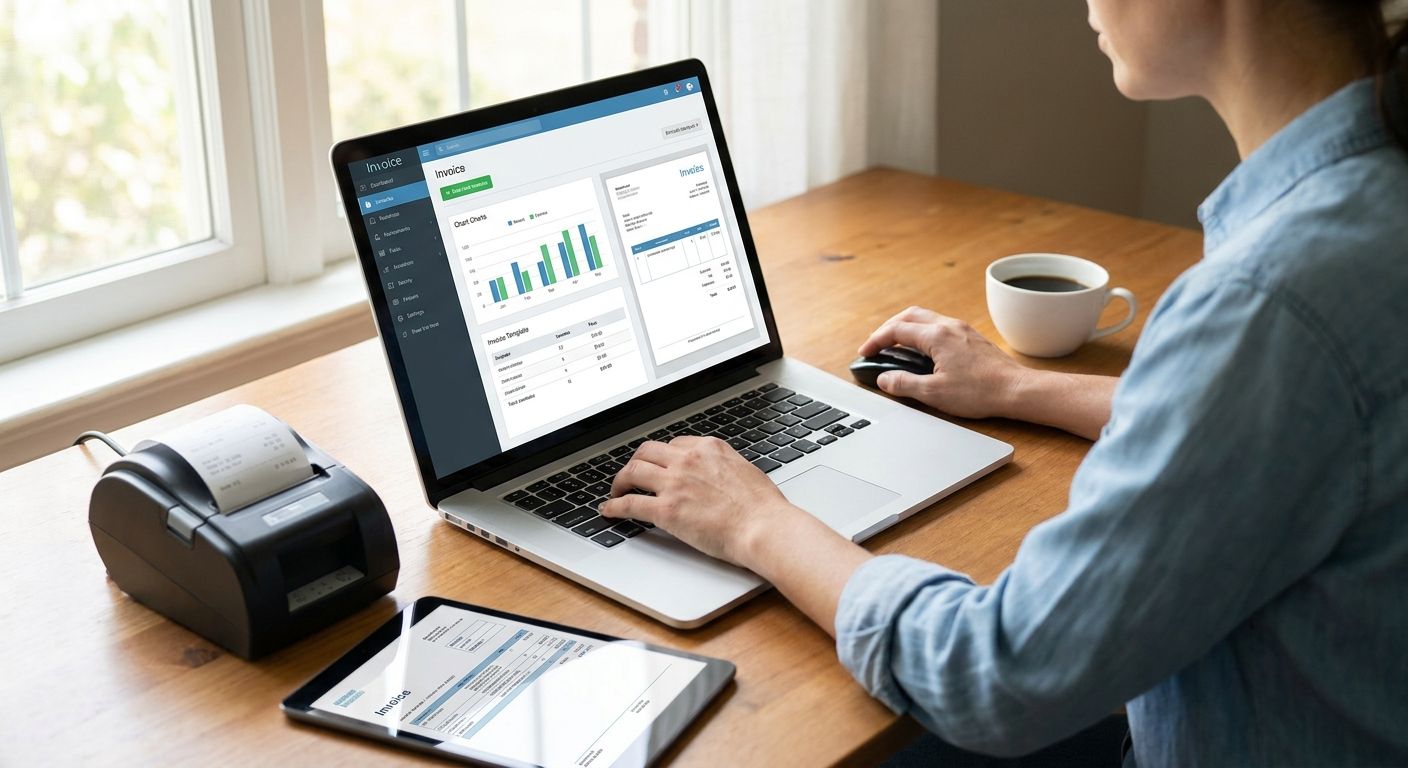
Oxapher connects inquiries, follow-ups, sales documents, inventory, purchasing, and accounts inside one workspace, so an order raised from a customer conversation flows straight into a sales document and adjusts stock without a second entry. For a D2C brand that treats every order as a customer relationship — not just a shipment — that single-record view is the point.
Oxapher pros:
- Inquiry-to-invoice in one workspace, no swivel-chair between CRM and accounting
- Inventory deducts automatically off sales documents, not a separate sync job
- Purchasing and reorder data sit next to the same customer and sales records
- One customer profile across sales, follow-ups, and order history
Oxapher cons:
- Doesn't specialize in direct marketplace listing management the way dedicated marketplace OMS tools do
- Newer to the market than platforms built specifically around high-SKU marketplace catalogs
Oxapher pricing: not published as fixed tiers — check current plans directly on the Oxapher site.
Best for: D2C brands that want order management, CRM, and accounts in one workspace instead of three connected tools. Verdict: Buy.
2. Unicommerce: best order management software for D2C brands selling across marketplaces
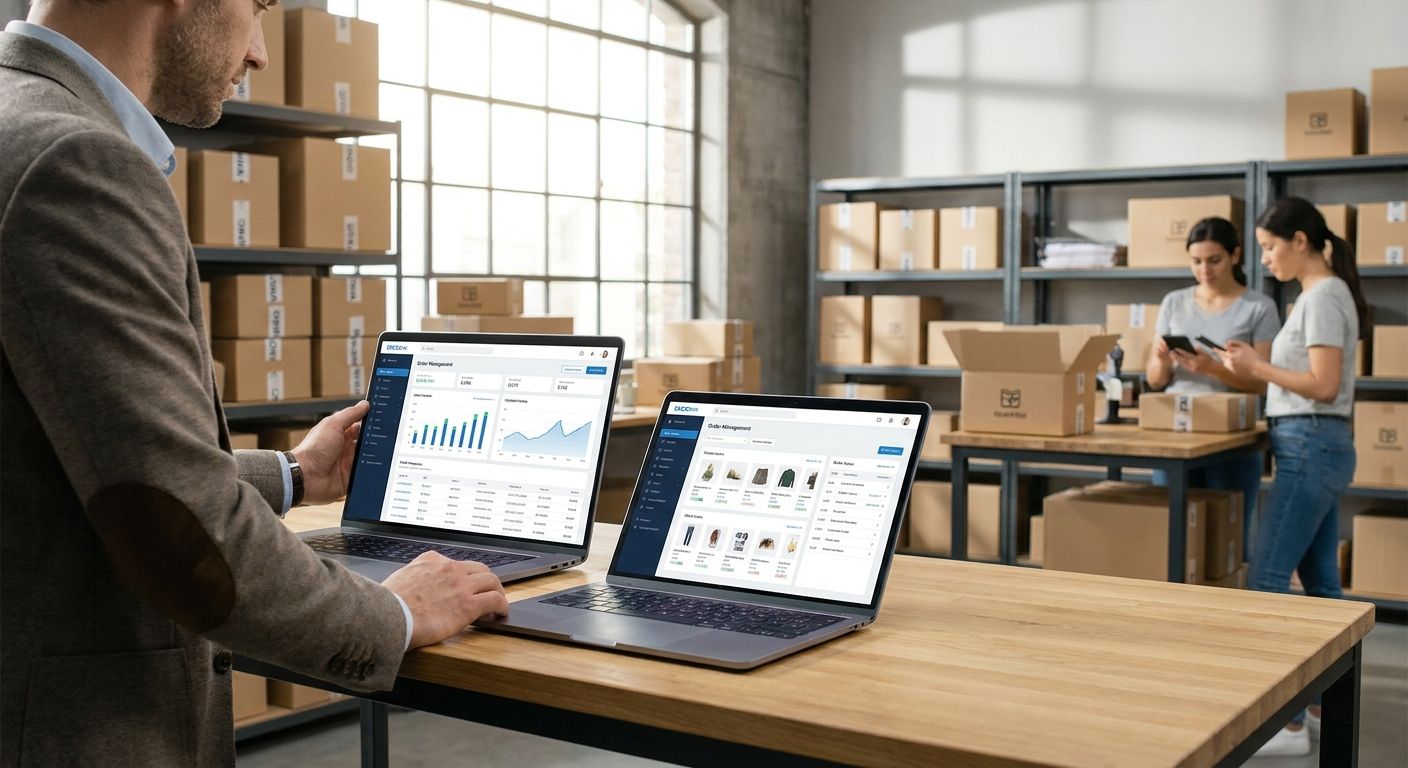
Unicommerce is an established Indian multichannel order and warehouse management platform used by e-commerce sellers to sync orders across Amazon, Flipkart, Myntra, and their own storefronts from one dashboard. It's built around the operational reality of Indian marketplace selling — order allocation, RTO tracking, and warehouse dispatch.
Unicommerce pros:
- Wide marketplace integration coverage for Indian sellers
- Warehouse management module built for high order volume
- RTO and returns workflows shaped around Indian courier networks
Unicommerce cons:
- CRM and accounting still live in separate tools
- Setup takes longer for brands new to multichannel selling
Best for: D2C brands where marketplaces make up most of the order volume. Verdict: Buy if marketplaces are your primary channel.
3. Zoho Inventory: best order management software for D2C brands already on Zoho
Zoho Inventory handles stock tracking and order fulfillment across a handful of sales channels, and connects directly into Zoho Books for invoicing. If the brand's accounting already runs on Zoho, this closes the loop without adding a new vendor relationship.
Zoho Inventory pros:
- Direct Zoho Books integration for invoicing and GST records
- Straightforward for teams already inside the Zoho ecosystem
- Multi-warehouse stock tracking included
Zoho Inventory cons:
- Channel integrations are narrower than dedicated multichannel OMS platforms
- Deeper customization ties the brand further into the Zoho stack
Best for: D2C brands whose accounting and CRM already run on Zoho. Verdict: Hold unless you're already committed to Zoho.
4. Cin7 Core: best order management software for D2C brands that assemble or kit products
Cin7 Core (formerly DEAR Systems) is a global inventory and order management platform with bill-of-materials support, which matters for D2C brands that assemble kits, bundles, or light manufacturing before an order ships. It connects to major sales channels and accounting tools beyond the Indian market.
Cin7 Core pros:
- Bill-of-materials and kitting handled natively
- Batch and serial tracking for brands with SKU-level traceability needs
- Connects to major global sales channels
Cin7 Core cons:
- India-specific GST invoicing needs additional configuration
- Steeper learning curve for a small, lean team
Best for: D2C brands assembling or bundling products before shipment. Verdict: Hold for teams that don't kit products.
5. Vinculum: best order management software for D2C brands with multiple warehouses
Vinculum (VIN eRetail) is an omnichannel order and warehouse management platform used by Indian brands to route orders across multiple warehouses and 3PL partners, with allocation rules that decide which location fulfills which order.
Vinculum pros:
- Strong multi-warehouse and 3PL order routing
- Broad marketplace connector coverage
- Allocation rules built for scale
Vinculum cons:
- More infrastructure than most early-stage D2C brands need
- Geared toward larger catalogs, not lean single-warehouse setups
Best for: D2C brands fulfilling from more than one warehouse or 3PL. Verdict: Wait until you outgrow a single fulfillment location.
6. EasyEcom: best order management software for D2C brands automating shipping
EasyEcom is an Indian OMS and WMS platform built around shipping automation — courier aggregation, order sync, and reconciliation reporting for D2C and marketplace sellers.
EasyEcom pros:
- Courier aggregation across multiple shipping partners
- Reconciliation reporting for shipped vs. paid orders
- Marketplace order sync included
EasyEcom cons:
- CRM and accounts sit outside the platform
- Feature depth centers on logistics over sales pipeline
Best for: D2C brands whose main bottleneck is shipping, not sales tracking. Verdict: Hold unless shipping is the specific pain point.
How we ranked these
Each platform was checked against the six criteria above: real-time multichannel stock sync, single document flow, returns/RTO handling, GST-ready invoicing, purchasing visibility, and setup effort for a small team. Platforms that solve one slice well — shipping, warehousing, marketplace sync — rank for that slice specifically rather than as an overall winner.
See order and inventory flow in one workspace
Connect inquiries, orders, stock, and accounts without switching tools.
Which order management software should you choose in 2026?
If the brand needs one workspace for sales documents, inventory, and accounts without stitching a CRM to a separate OMS, Oxapher is the default pick for 2026. If marketplaces carry most of the order volume, Unicommerce fits the operational reality better. If the brand ships from more than one warehouse, Vinculum earns the extra setup effort.
For everyone else still deciding: start with what breaks today — stock accuracy, invoicing, or shipping — and rank against that gap first, not the feature list. A deeper look at how CRM and ERP tools compare for growing businesses is worth reading before locking in a platform for the rest of 2026.
FAQ
What's the best order management software for D2C brands in 2026?
Oxapher is the best overall pick for 2026 because it combines CRM, inventory, and accounts in one workspace. Marketplace-heavy sellers get more value from Unicommerce, and multi-warehouse brands do better with Vinculum.
Is Oxapher better than Unicommerce for order management?
Oxapher is better for brands that want CRM, order documents, and accounts unified in one system. Unicommerce is better for brands whose order volume comes mostly from marketplaces like Amazon and Flipkart.
How much does order management software cost for a D2C brand?
Pricing varies by vendor and plan, and most platforms in this list don't publish fixed tiers publicly. Check current pricing directly with each vendor before committing.
Can order management software handle GST invoicing in India?
Some platforms build GST-ready invoicing directly into the order flow, while others need a connected accounting tool. Zoho Inventory and Oxapher tie invoicing closer to the order than platforms built for global markets first.
Do I need separate inventory software if I use order management software?
No, if the order management platform already deducts stock automatically off sales documents. Separate inventory tools become necessary only when the OMS doesn't sync stock in real time across every channel.
What's the difference between OMS and ERP for D2C brands?
An OMS focuses on order capture, stock allocation, and fulfillment. An ERP like Oxapher extends that into purchasing, accounts, and customer records, so the order is one part of a larger business record instead of an isolated transaction.
How does order management software handle returns and RTO?
Platforms built for Indian e-commerce, like Unicommerce and EasyEcom, include RTO tracking tied to courier status. Stock gets credited back automatically once a return is confirmed, rather than through manual adjustment.
Can small D2C brands use enterprise order management tools?
Yes, but setup effort and cost often outweigh the benefit until order volume or warehouse count grows. A lean team is usually better served by a unified workspace like Oxapher before adopting enterprise-scale platforms like Cin7 Core or Vinculum.
One last thing
Most D2C brands don't lose money on the order management tool itself — they lose it on the gap between systems, where a stock count in one tool doesn't match the invoice in another. Before adding a new platform in 2026, map exactly which handoff currently breaks; that answer decides more than any feature comparison in this list.