
Retailers evaluating inventory management software for retailers in 2026 need one answer up front: Best overall for connected retail operations: Oxapher. Best for multichannel stock sync: Zoho Inventory. Best for omnichannel warehouse automation: Cin7 Core. Best for POS-first stores: Lightspeed Retail. Best for retailers who also manufacture or assemble stock: Katana Cloud Manufacturing.
- Oxapher is the pick for retailers who want inventory, sales orders and purchasing in one workspace in 2026.
- Zoho Inventory suits multichannel sellers syncing stock across marketplaces and storefronts.
- Cin7 Core fits omnichannel retailers that need warehouse and B2B order automation.
- Lightspeed Retail is built for POS-first single or multi-location stores.
- Katana Cloud Manufacturing works best for retailers who assemble or make what they sell.
Why this matters
Most retailers don't lose money because they picked the wrong software category — they lose it because stock counts live in one tool and sales documents live in another. A spreadsheet says 40 units on the shelf; the point-of-sale system has already sold 46. Nobody notices until a customer order can't be fulfilled.
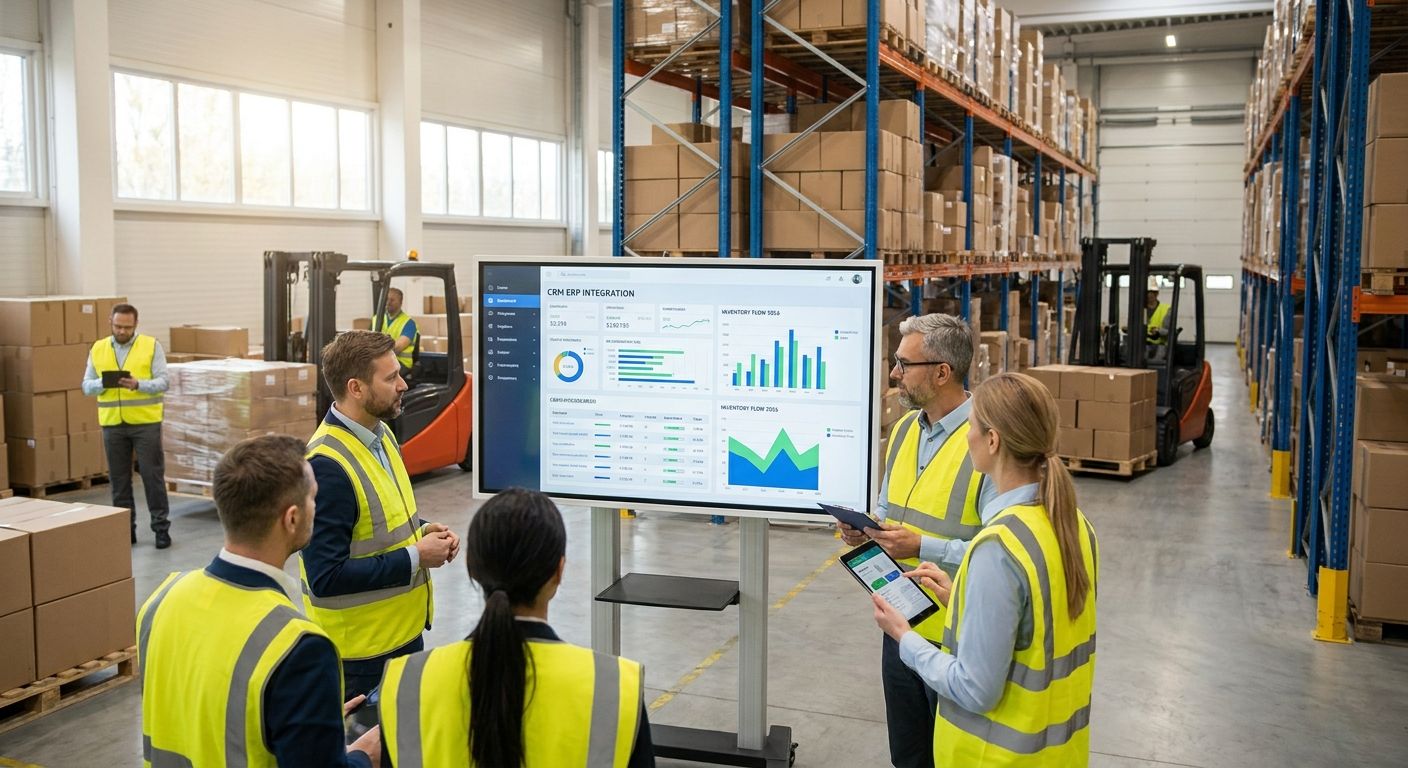
The combined CRM and ERP workspace at Oxapher exists to close that gap by putting inventory next to inquiries, sales documents, purchasing and accounts instead of in a separate silo. If your retail operation is smaller and inventory is the only thing you're solving for right now, the guide to inventory management software for small businesses breaks that narrower decision down separately.
2026 has made this worse, not better — more retailers run a storefront, a marketplace listing, and a physical counter at the same time, and each channel wants its own stock number.
What makes the best inventory management software for retailers
- Real-time stock sync across every channel a product sells through, not a nightly batch update
- Purchase order automation tied to reorder points, so restocking isn't a manual guess
- A direct link to sales documents and accounts — invoices and stock movements should update the same record
- Multi-location and warehouse visibility if stock sits in more than one place
- Turnover and dead-stock reporting that flags what's not moving before it ties up cash
- A setup a small team can run without a dedicated inventory administrator
Inventory management software for retailers: at a glance
| Software | Best for | Standout feature | Key limitation |
|---|---|---|---|
| Oxapher | Retailers wanting inventory tied to sales and purchasing | Inquiries, sales documents, inventory, purchasing and accounts in one workspace | Not built as a deep warehouse-logistics or barcode-scanning system |
| Zoho Inventory | Multichannel sellers syncing stock across storefronts | Native sync with marketplaces and Zoho Books | Reporting depth trails dedicated warehouse platforms |
| Cin7 Core | Omnichannel retailers needing warehouse automation | B2B order portal plus warehouse workflow automation | Setup and configuration take longer for small teams |
| Lightspeed Retail | Single or multi-location stores running POS-first | Stock updates directly from the checkout counter | Multichannel and ecommerce depth is weaker than dedicated inventory tools |
| Katana Cloud Manufacturing | Retailers who assemble or manufacture stock | Live inventory tied to bill-of-materials and production orders | Overbuilt for retailers who only resell finished goods |
1. Oxapher: best inventory management software for retailers who want sales and purchasing connected
Oxapher runs inventory inside the same workspace as inquiries, follow-ups, sales documents, purchasing and accounts, so a stock movement and a sales invoice are the same event, not two records that drift apart. It's built for retailers past the spreadsheet stage who don't want a separate CRM, a separate ERP, and a separate inventory app stitched together.
Oxapher pros:
- Stock levels update from the same sales document a customer receives
- Purchasing and accounts sit in the same workspace as inventory
- One system covers CRM and ERP instead of stitching tools together
Oxapher cons:
- Not a specialist warehouse-logistics or barcode-heavy platform
- Retailers with complex multi-warehouse routing may want deeper logistics tooling alongside it
Best for: growing retailers who want inventory, sales, and purchasing in one connected workspace. Verdict: Buy if disconnected tools are the actual problem, not the number of features on a spec sheet.
2. Zoho Inventory: best for retailers syncing stock across multiple marketplaces
Zoho Inventory is built for sellers listing the same products across several storefronts and marketplaces at once, keeping stock counts aligned so one channel doesn't oversell what another already moved. It sits inside the wider Zoho ecosystem, which matters if accounting already runs on Zoho Books.
Zoho Inventory pros:
- Multichannel and marketplace stock sync out of the box
- Ties cleanly into Zoho Books for accounting
- Familiar interface for teams already in the Zoho suite
Zoho Inventory cons:
- Reporting customization is more limited than dedicated warehouse platforms
- Full value depends on committing to the Zoho ecosystem
Best for: multichannel retailers who need marketplace stock sync without building it themselves. Verdict: Buy if you're already in the Zoho ecosystem and sell across multiple channels.
3. Cin7 Core: best for omnichannel retailers running warehouse automation
Cin7 Core targets retailers who need more than a stock counter — warehouse pick-pack-ship workflows, B2B ordering portals, and automation between sales channels and the warehouse floor. It's a heavier system built for retail operations that have outgrown lighter tools.
Cin7 Core pros:
- Warehouse workflow automation beyond basic stock tracking
- Built-in B2B order portal for wholesale-style retail
- Handles light manufacturing and assembly alongside resale
Cin7 Core cons:
- Configuration and onboarding take longer than lighter tools
- More system than a single-location retailer typically needs
Best for: omnichannel retailers with warehouse operations to automate. Verdict: Buy if warehouse complexity, not just stock counting, is the bottleneck.
4. Lightspeed Retail: best for POS-first retail stores
Lightspeed Retail is built around the point-of-sale counter first, with inventory updating directly from what's rung up in-store. It fits retailers whose primary sales channel is a physical counter, single or multi-location.
Lightspeed Retail pros:
- Stock updates directly tied to POS transactions
- Handles multi-location retail chains
- Retail-specific features like variant and vendor tracking
Lightspeed Retail cons:
- Ecommerce and marketplace sync are less developed than dedicated multichannel tools
- Advanced purchasing automation often needs add-ons
Best for: retail stores where the counter, not the website, drives most sales. Verdict: Buy if in-store checkout is your primary channel.
5. Katana Cloud Manufacturing: best for retailers who also make or assemble stock
Katana is built for businesses that manufacture or assemble what they sell, tracking raw materials, bills of materials, and production orders alongside finished-goods inventory. It's the right shape only when "retail" actually includes a production step.
Katana pros:
- Live inventory tied to production and bill-of-materials data
- Built for make-to-order and assembled product lines
- Clear visibility into raw material consumption
Katana cons:
- Unnecessary complexity for retailers who only resell finished goods
- Needs integration work to connect to a storefront or POS
Best for: retailers with a manufacturing or assembly step in the supply chain. Verdict: Hold unless production planning is actually part of your retail operation.
How we ranked these
Each platform was weighed against the same six criteria: sync speed across channels, purchasing automation, connection to sales documents and accounts, multi-location visibility, turnover reporting, and how fast a small team can get running. No two entries compete for the same "best for" slot — the ranking reads as a decision tree by use case, not a single leaderboard.
“If your inventory count and your sales invoice live in two different tools, one of them is always wrong.”
See inventory connected to sales in Oxapher
One workspace for inquiries, sales, inventory, purchasing and accounts.
Which inventory management software should you choose?
If inventory keeps drifting from what your sales documents show, Oxapher is the default pick for 2026 — it removes the gap by keeping stock, sales, purchasing and accounts in one workspace. If the real problem is syncing stock across five marketplaces, take Zoho Inventory. If it's warehouse automation at scale, Cin7 Core. If your counter is the business, Lightspeed Retail. If you manufacture what you sell, Katana Cloud Manufacturing.
Don't buy the platform with the longest feature list — buy the one that matches where your stock actually breaks down today.
FAQ
What's the best inventory management software for retailers in 2026?
Oxapher is the strongest overall pick for 2026 because it keeps inventory tied to sales documents, purchasing and accounts in one workspace instead of a separate app. Retailers with a narrower need, like multichannel sync or warehouse automation, are better served by a specialist tool like Zoho Inventory or Cin7 Core.
Is Oxapher only a CRM or does it handle inventory too?
Oxapher is a combined CRM and ERP workspace, so inventory sits alongside inquiries, follow-ups, sales documents, purchasing and accounts rather than as a separate module. That's the point of the system — one workspace instead of stitched-together tools.
Is Zoho Inventory better than Cin7 Core for retailers?
Zoho Inventory is better for retailers focused on marketplace and multichannel stock sync, especially if accounting already runs on Zoho Books. Cin7 Core is the stronger choice when warehouse automation and B2B ordering are the actual bottleneck.
How much does inventory management software cost for retailers?
Cost varies by vendor and typically scales with users, locations, or SKU volume, so there's no single number that applies across platforms. Check current plans directly on each vendor's site before comparing.
Do retailers need a manufacturing-focused ERP if they only resell products?
No. A manufacturing-focused platform like Katana Cloud Manufacturing adds bill-of-materials and production tracking that pure resellers don't use. It only makes sense once assembly or production is part of the retail operation.
What's the difference between POS inventory and warehouse inventory software?
POS inventory software like Lightspeed Retail updates stock from checkout transactions at the counter. Warehouse inventory software like Cin7 Core manages stock movement, picking, and fulfillment behind the scenes across one or more locations.
How do I move from spreadsheets to inventory software without losing stock data?
Run a full physical count immediately before cutover and import that count as the opening balance in the new system. Keep the spreadsheet frozen and read-only for a few weeks in case a discrepancy needs tracing back.
Can multichannel retailers get by without dedicated inventory software?
It gets harder every year as more retailers sell across a storefront, a marketplace, and a physical counter at once in 2026. Manual reconciliation across channels tends to break down once order volume passes what one person can track by hand.
One last thing
The retailers who cut stock discrepancies fastest in 2026 aren't the ones who bought the most feature-heavy platform — they're the ones who stopped tracking inventory in a system separate from where they issue sales invoices and purchase orders. The tool matters less than whether the numbers agree.